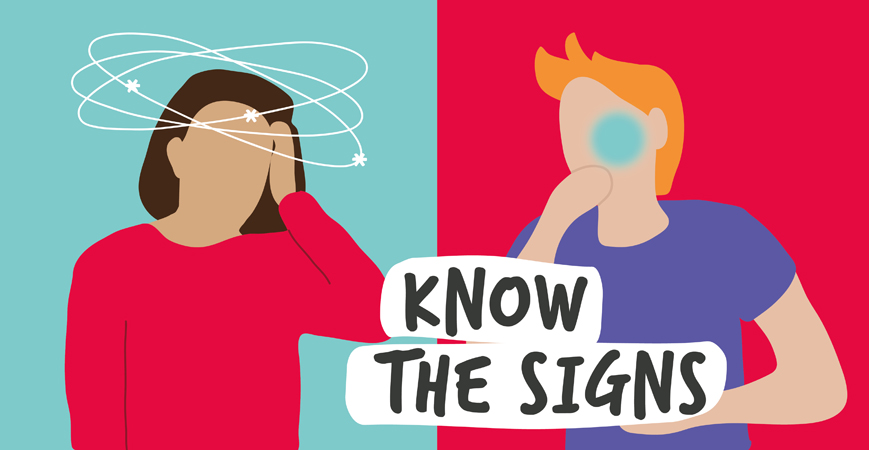
Diagnosing brain tumours can be difficult and slow. This is because they often present with vague, non-specific symptoms, like headaches, nausea and fatigue. In fact, four out of ten respondents (41%) to our Improving Brain Tumour Care surveys said they visited their GP three or more times before getting a diagnosis. That’s why we’ve been pushing for faster, fairer diagnosis.
A faster diagnosis can help prevent long-term disability and change lives. That’s why we’ve invested in projects to accelerate faster, fairer diagnosis for the brain tumour community.
HeadSmart leads the way
Sadly, when the Samantha Dickson Research Trust was founded in 1996, it was even more difficult to receive a timely diagnosis. This is because there was even less awareness of common brain tumour signs and symptoms.
Based on research from the University of Nottingham, we launched our UK-wide HeadSmart campaign to raise awareness of brain tumour symptoms in babies, children and teenagers.
Thanks to the support of the brain tumour community, we were able to help cut average diagnosis times from 13 weeks to just 6.5 weeks. Helping to give families precious extra time when it matters most.
HeadSmart won awards in the UK and was voted the UK’s favourite National Lottery funded health project. It also gained international recognition as a model to inform the public about less survivable cancers and their symptoms. It was recognised by the Australian government and recommended as the basis for its own national campaign. After translations into French and Greek, HeadSmart Jordan was launched to help cut down diagnosis times in Arabic-speaking countries.
Launching our Better Safe Than Tumour campaign
In the summer of 2022, we evolved HeadSmart into Better Safe Than Tumour. The new campaign expanded the focus from common symptoms in children to adults as well.
In less than four years since the launch, we’ve already had an incredible impact – all thanks to your support. To date, it’s reached more than 35 million people and more than 137,000 people have used the online symptom checker.
When we launched Better Safe Than Tumour, 72% of people we asked were unable to name a single brain tumour symptom. When we performed the same survey in July 2025, we found that we’d helped reduce this down to 43%.
Campaigning for faster, fairer diagnosis across the UK!
As well as boosting symptom awareness, we’ve been busy campaigning for policy change across the UK to help make sure people are able to get a faster, fairer diagnosis for people affected by brain tumours.
In 2023, we launched our Fighting for Faster Diagnosis report. It laid out eight recommendations for how policy makers in government and the NHS can help speed up diagnosis times.
Fast, efficient diagnosis has also been one of the four core pillars of our campaign for a National Brain Tumour Strategy. More than 52,000 people supported this campaign. This led to engagement with 94% of MPs in the UK and we were able to meet with 75 politicians in 2025 alone.
In 2025, we published our Exploring GP Access to Brain Scans report into the barriers GPs face in being able to diagnose people with a brain tumour. This report highlighted the need for a full and comprehensive diagnostic pathway for suspected brain tumours.
When the National Cancer Plan for England was published in February 2026, we were delighted to see there was a long-overdue shift in how brain tumours are recognised and prioritised within cancer planning in England. As well as a renewed emphasis on improving diagnostic pathways.
We also welcomed the news that NHS Scotland had published updated referral guidance for suspected cancers – included brain tumours. The new guidance reflects many of the improvements we’ve been campaigned for and even signposts Better Safe Than Tumour.
“These updated guidelines represent meaningful progress in the diagnosis of brain tumours in Scotland. By giving GPs clearer tools and better recognition of symptom patterns, they support more timely and accurate referrals.”
Cameron Miller, Director of External Affairs & Strategy, The Brain Tumour Charity
Funding research to accelerate faster, fairer diagnosis!
We know that funding pioneering research can help uncover new, better ways of diagnosing brain tumours.
A significant step towards a blood test for glioblastoma
Researchers in Manchester have developed a new blood-based method that could help diagnose and monitor glioblastoma in the future.
The study, part-funded by The Charity and published in Neuro-Oncology Advances, provides early evidence that a pair of proteins circulating in the blood can detect glioblastoma with more than 96% accuracy.
Partnership with the Grace Kelly Childhood Cancer Trust
In 2025, we announced a new co-funding partnership with the Grace Kelly Childhood Cancer Trust. The funding was awarded to Dr John Apps to test an AI tool to see if it can accurately provide faster diagnoses in a real-world hospital setting.
Funding liquid biopsies through the Cancer Tech Accelerator
In 2025, we awarded £70,000 as part of the Cancer Tech Accelerator to help develop liquid biopsies that could speed up brain tumour diagnosis.
Bringing researchers together to explore faster, fairer diagnosis
In 2024, we sponsored a symposium in Manchester which brought together brain tumour experts to explore innovative ways to improve brain tumour diagnosis nationally.
Working with the healthcare community
We also work closely with the healthcare community to improve diagnosis of brain tumours. Over the last 30 years, we’ve developed training, tools and resources for GPs to help them understand the common symptoms of brain tumours.
Optometrists and other optical professionals can also play an essential role in the early detection of brain tumours. Our Optical Engagement team have trained thousands of optical professionals to be able to spot those subtle signs through regular eye exams.
Want to help us keep improving diagnosis for brain tumours?
This progress has changed lives! But too many people are still being let down when it comes to a fast, fair diagnosis.
We need your help to keep spreading awareness.
Order a Better Safe Than Tumour pack to help us reach more families with this vital information.