
Our London Marathon 2026 runners share their stories
Meet Amy, Richard, Gareth, Gwen and Elin, Faith and Pippa – our London Marathon 2026 runners. Find out why they are taking on the iconic London Marathon this year. You can also find out how to listen to interviews with some of them on our podcast here.
Amy’s story

Running the marathon will be hard – but not as hard as recovering from brain surgery.”
Amy
Amy Hills, from New Malden, Surrey, is running just two years after being diagnosed with a brain tumour.
Amy’s diagnosis with an acoustic neuroma – also known as vestibular schwannoma, a type of low-grade brain tumour that usually forms in the nerves between the ear and the brain, and mainly affects adults – came as a big shock. She said: “I had no idea something was actually wrong until I suddenly lost some of my hearing in my left ear, and even then I initially thought it was just a bit of an ear infection. But looking back now, there were warning signs. I would have bad headaches, particularly at the back of my head, to the point of needing to use a specific pillow at night. And when I look back at pictures of the year before my diagnosis, I can see the imbalance in my face where the left side was starting to weaken.”
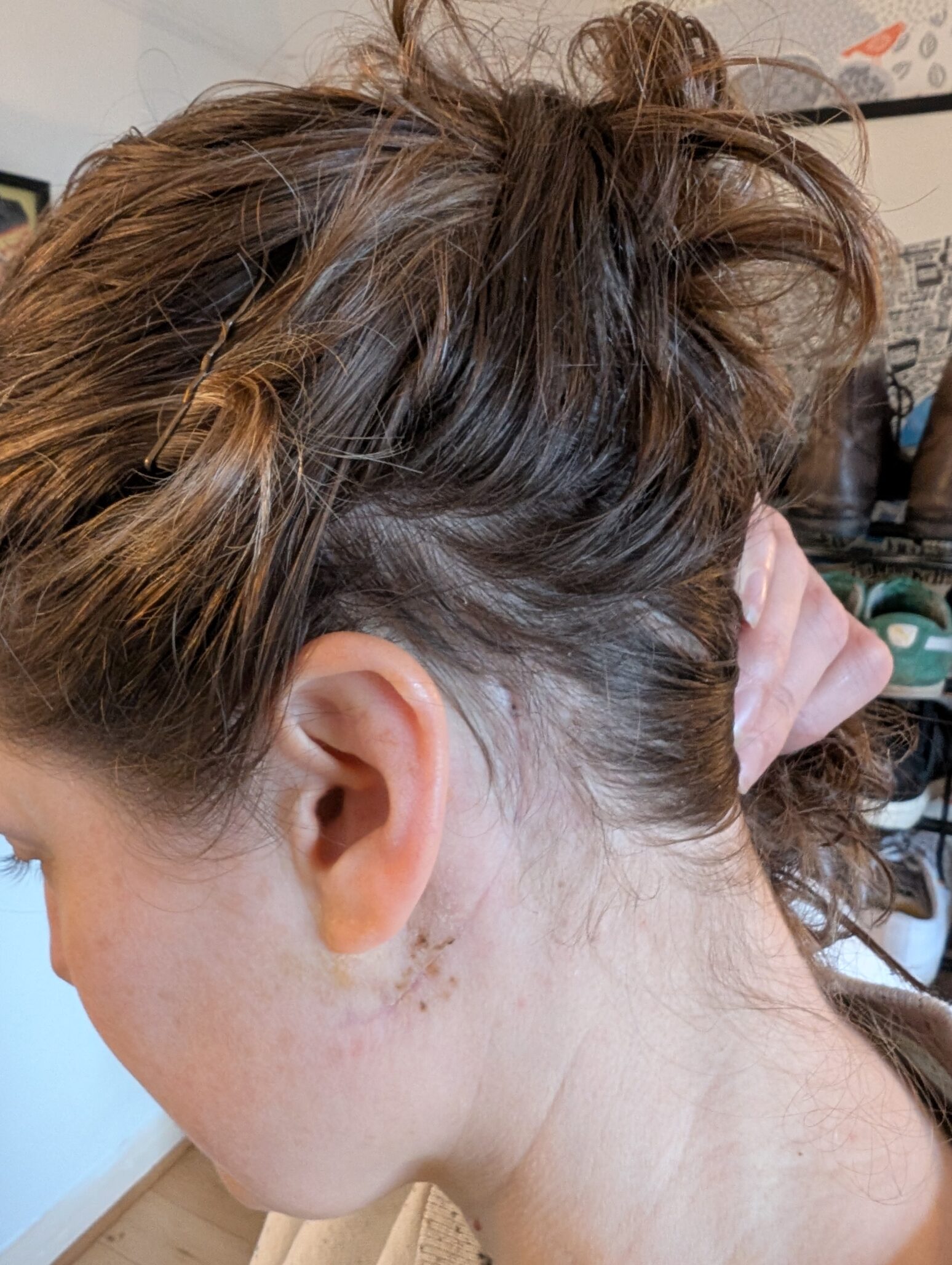
Although benign, Amy’s tumour was large, and she knew from day one that surgery would be needed. Her operation, 6 months after diagnosis, left her deaf in one ear, and she still juggles fatigue as she recovers: “The deafness has taken a while to get used to – a lot of things such as loud spaces and socialising in groups are now quite overwhelming,” she says. “It’s now an ongoing joke the number of times my husband makes me jump as I don’t realise he has walked into the room until he speaks, or when he leaves the room I don’t hear and so I’m just chatting away to myself!
“The fatigue post-surgery is now finally easing; luckily napping is my superpower, I can sit or lay down anywhere and sleep, be it public transport, cars, a festival field, or the beach!
“I think the hardest thing is knowing there is still some tumour left, and so monitoring for regrowth will be lifelong. Every August from now on I’ll jump into the MRI, and the result will determine what the next year looks like for me.”
Although never a regular runner – “The last time I ran was a half-marathon in 2015 – I hated it and might have cried several times!” Amy used to row, and has completed triathlons.
Running the marathon distance will be a significant challenge, and she’s been training hard to be in good shape for race day: “Coming back to running since surgery has been a whole different experience, I’ve had to re-learn what my limits are, I have to be so mindful of listening to how my body feels and getting enough rest.
“Training through winter has been tough, the rain felt relentless! But the biggest challenge has been trying to balance work, everyday adult life and training with recovery and fatigue.
“The long runs have been hard but generally if I’m struggling, I just ask myself the question ‘Is this harder than recovering from brain surgery?’ The answer is always no so I carry on!”
Standing at the start line will be a celebration of her recovery and a reminder of how far she’s come: “Doing the marathon means so much. It’s like a line being drawn under the last two years,” she said. “The whole process has slowly built up my trust in my own body again. I didn’t want to just survive this. I wanted it to mean something.
“I’m most looking forward to the atmosphere. Running over Tower Bridge sounds incredible – and crossing the finish line of course! I’m secretly dreading how I will feel immediately after. When I’m very tired, I get a bit wobbly with my balance. It’s the perfect conditions to trigger my fatigue, with the physical exertion, the noise and crowds. But I’m so proud of what I’ve managed to achieve already, both with the training and the fundraising.
I’m so grateful to everyone who’s donated. The generosity and kind messages from friends, family and colleagues has been incredible. I wanted to run for The Brain Tumour Charity because their support, especially their free counselling service, has been so helpful to me. I continue to speak with the same therapist now, every week, to process the ripple effects of the brain tumour. Having someone with me from the beginning, who understands the emotional rollercoaster of a brain tumour diagnosis, has been truly invaluable.”
Richard’s story
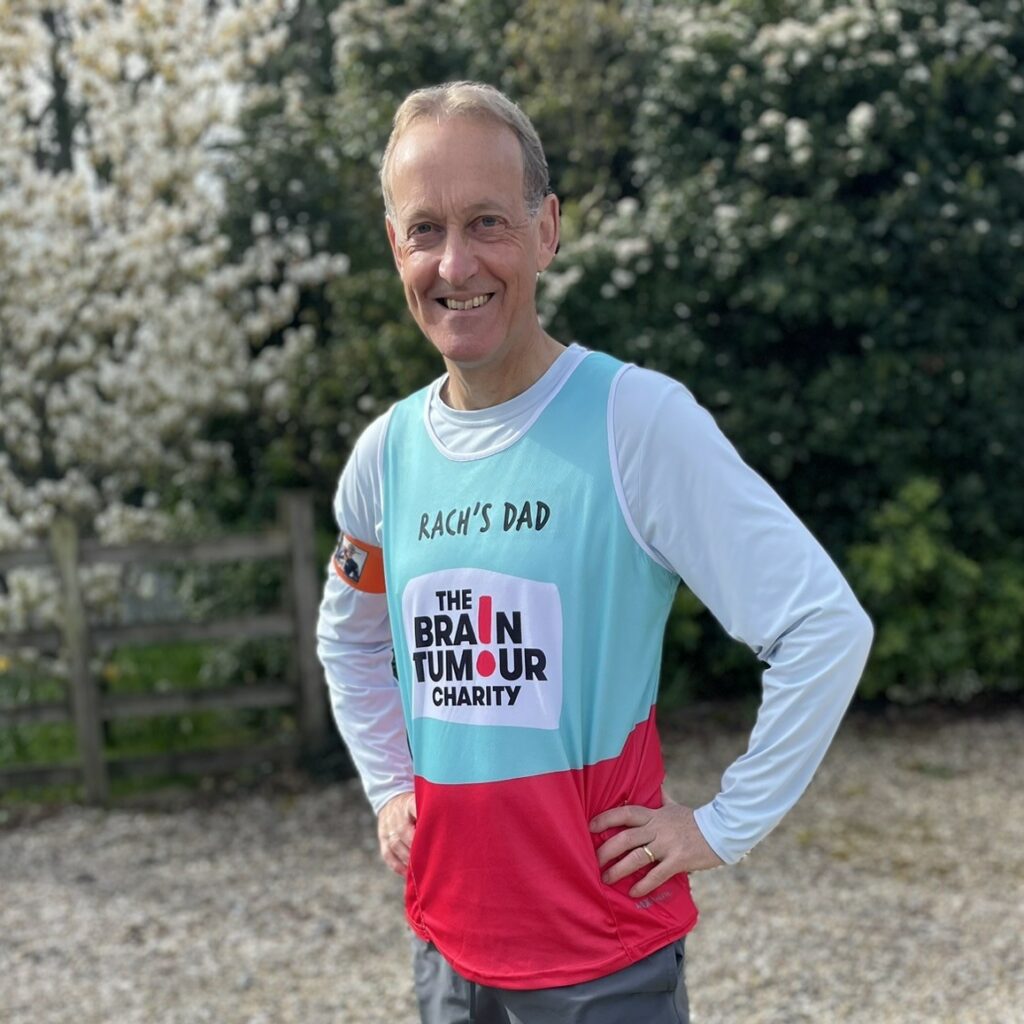
Rach and I talked about running a marathon. At one point in her treatment we’d decided I’d run 26 times round Chorlton Water Park as she passed me sweets and held up pictures of London landmarks. We didn’t manage that, but I was able to tell her that I had a place in London. It matters more than I can say."
Richard
By his own admission, Richard Field, 60, is no runner. A doctor once told him his bandy legs would make running long distances harder, and to make matters worse he’s just been diagnosed with a hernia. But on Sunday, April 26th, Richard will line up to tackle the iconic London Marathon course.
His inspiration is his daughter Rachel, who died from an aggressive brain tumour In July 2025. She was just 27.
Rachel’s diagnosis came following a seizure in April 2024. She’d had a few migraines in the weeks before that. Tests and scans revealed she had a glioblastoma brain tumour – the most common high-grade form of the disease in adults.
Richard said: “It is still unbelievable to us. Rachel loved life. She was full of life. She was uniquely special to so many people, and we miss her with the pain of an open wound.
“When she was diagnosed, she showed her courage in the way she endured her treatments, but even more in the way she stayed so positive. She never gave in. She was unbelievably brave. Eight months in, following surgery, radiotherapy and chemo, she ran the Tatton 10k to raise money for the Brain Tumour Charity. Friends and family piled in and about 35 of us ran with her, raising nearly £30k. A year after her diagnosis she and Ethan, her partner since school, had bought a van and driven it to Chamonix to go skiing. A month later they were climbing in the Peak District.”
Richard, who is married to Alison, says training for the marathon in Rachel’s memory helps him feel close to her.
“Rach and I talked about running a marathon. At one point in her treatment we’d decided I’d run 26 times round Chorlton Water Park as she passed me sweets and held up pictures of London landmarks. We didn’t manage that, but I was able to tell her that I had a place in London. It matters more than I can say.
“Running has become a place to be with her. I listen to her playlists and my promise to her has kept me going on the days when getting out of bed has been a struggle. I’ve been doing all I can to get to the start line in one piece and then I think the emotion will carry me through.
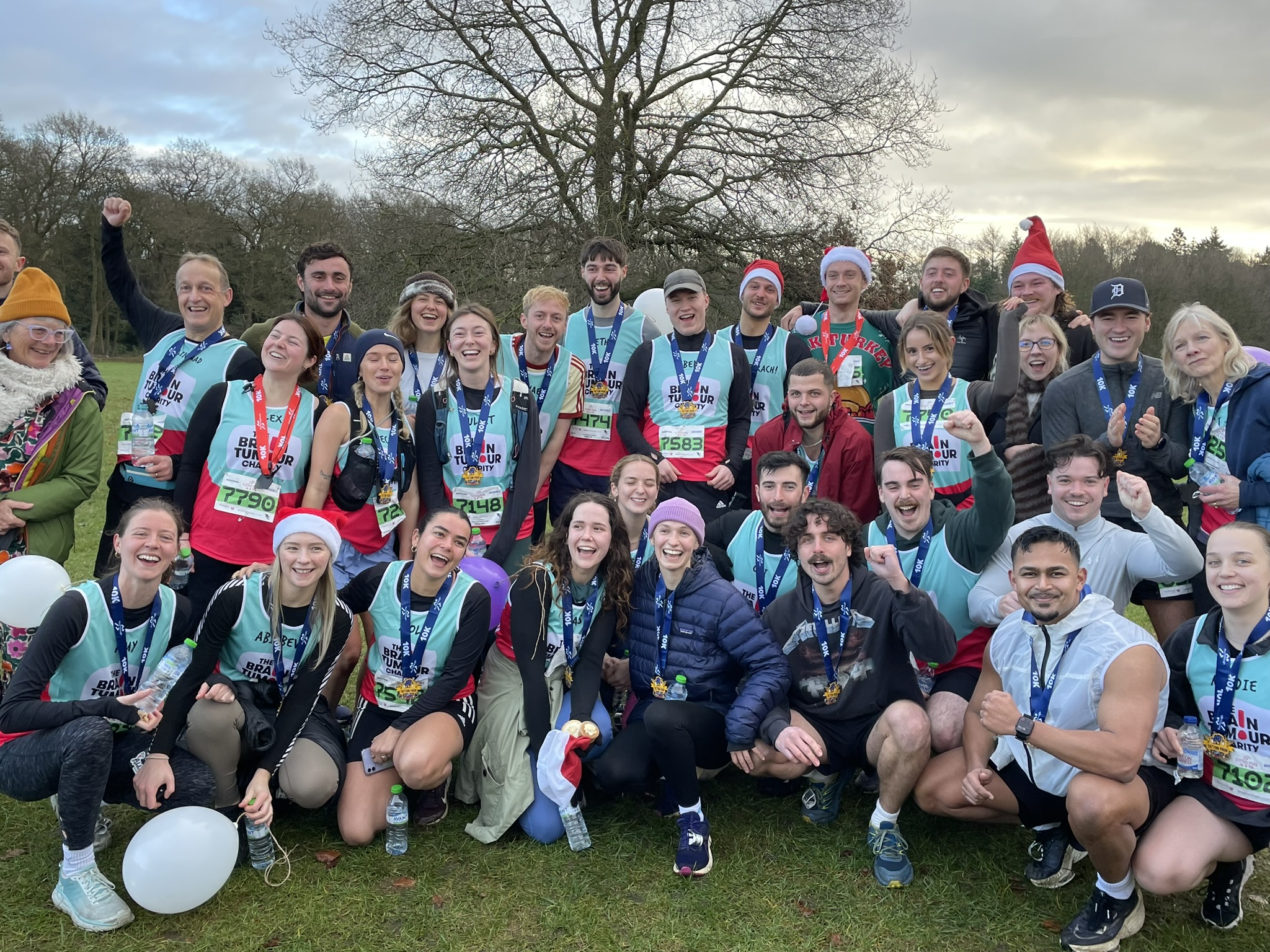
“When it gets tough, I’m hoping that the crowds, the atmosphere and the other runners, will work their magic. It will be brilliant to see Alison and our supporters. But mostly I’ll be thinking about Rachel. She’ll be with me every step of the way. I think the hardest part will be crossing the finish line. This has been so important to me – and I’ll have kept my promise to my beloved girl – but I’ll miss having this goal to keep me going.”
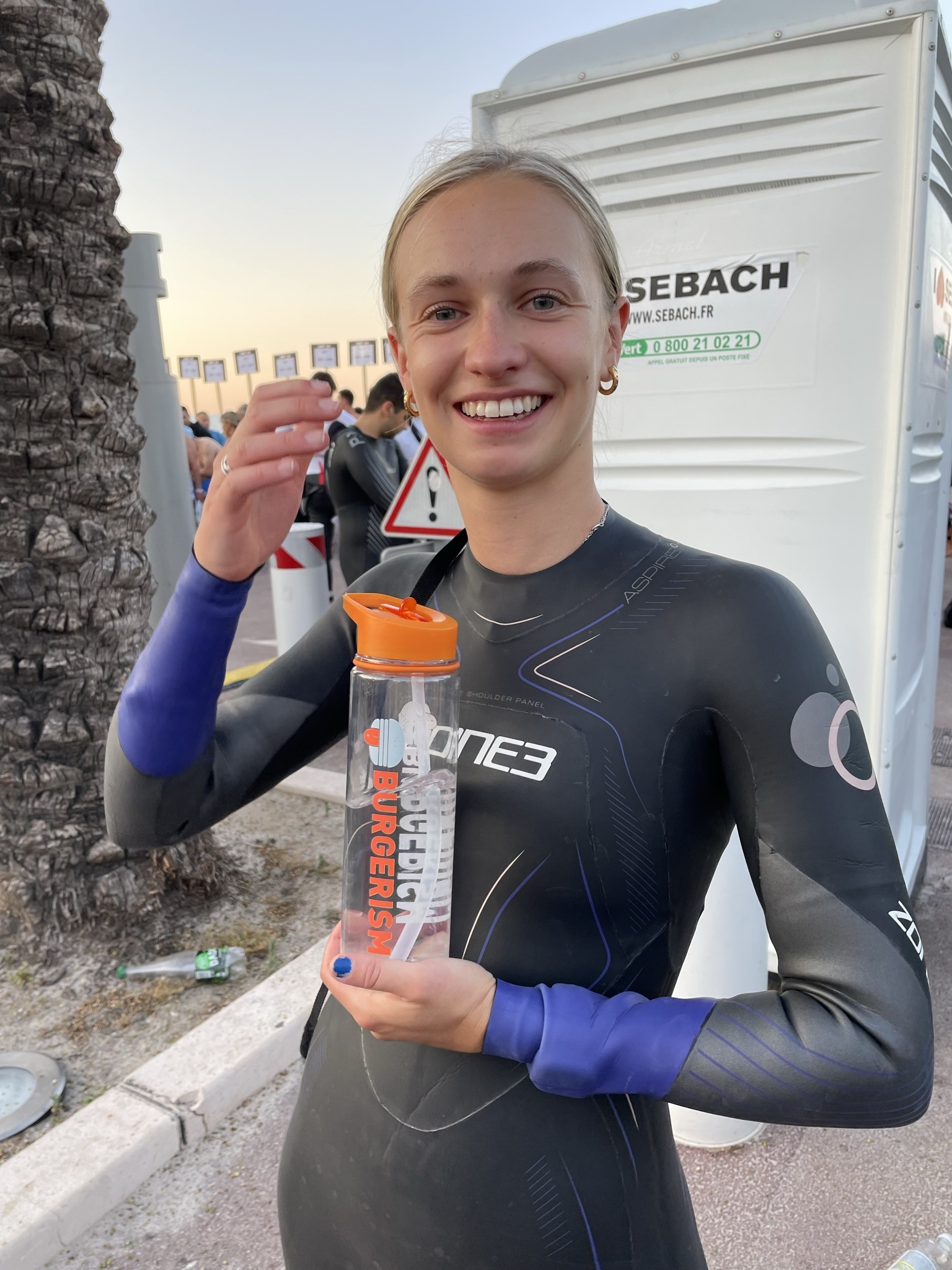
Richard’s marathon challenge is just one of many events that Rachel’s friends and family are doing in her name, all raising funds for The Brain Tumour Charity: “It started with one of her uni friends being inspired to try her first triathlon, because Rachel had done a Half Ironman in Nice in 2023, and we ended up with about 25 friends of all ages joining her for that.
“Rachel’s old hockey club organised a match which brought together club and university friends, and many people have been inspired by her to take up other sporting challenges like the Tatton 10k, swimming miles, triathlons, half marathons and marathons all over the world. We’ve got a gig coming up in October and my sister and mum are hosting a garden party in June. We want to hold her close, and coming together and doing the things she loved doing with the people who love her, is helping us all.”
The team hope to raise £50,000 and, with gift aid, have raised £45,000 so far.
Our beautiful girl deserved better. She deserved a chance that our current understanding of brain tumours and treatments couldn’t give her. We want this to change. We want life expectancies and life quality to improve, and this will only happen with more research. Every pound matters.”
Richard
Gareth, Gwen and Elin’s story
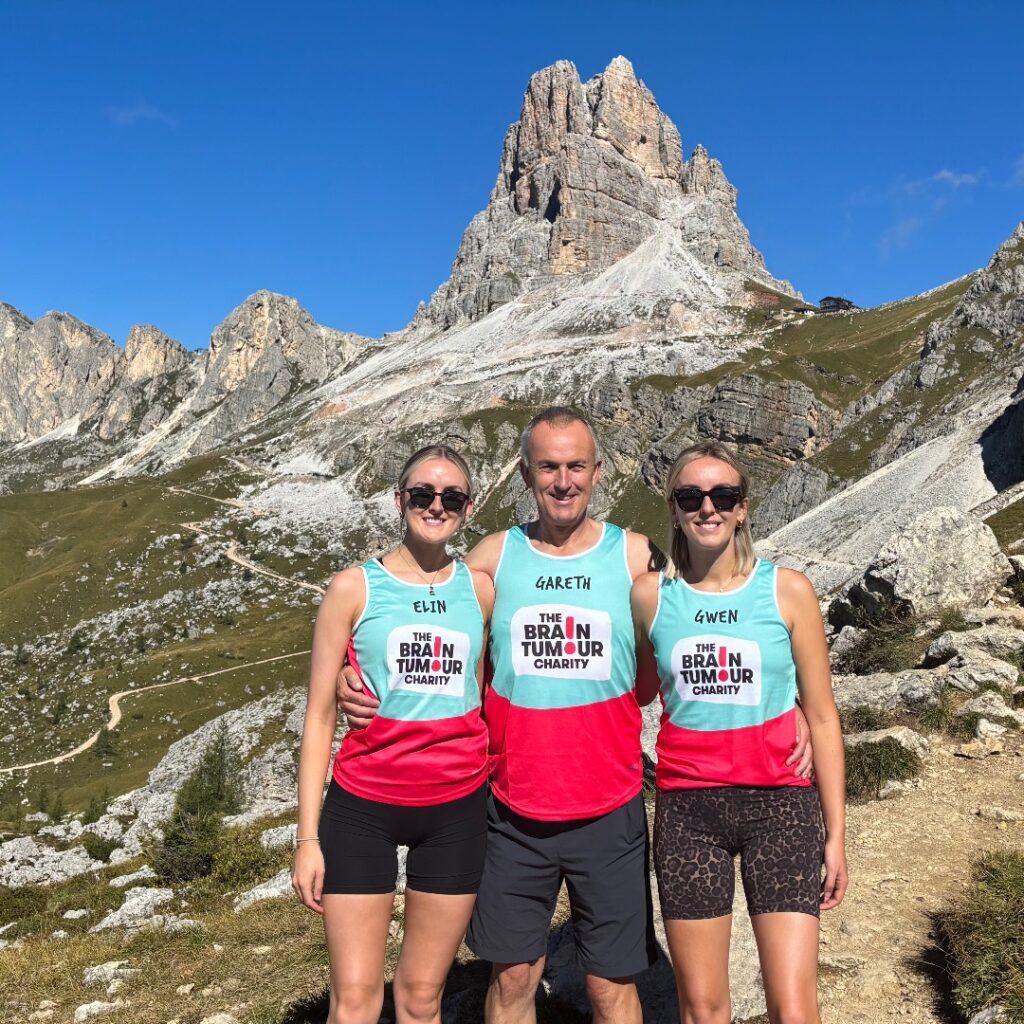
Nothing will ever prepare you to lose someone you love. I don’t think I would be running the London Marathon if it wasn’t for something so special. But we’ve been doing quite a lot of training and Dad and El keep me going!”
Gwen
Gareth Davies and daughters, Gwen and Elin, from Cefn Gorwydd in Powys, are running in memory of wife and mum Michelle Davies, who died in March last year following a glioblastoma diagnosis. It will be Gareth’s second London Marathon – he previously ran it 10 years ago – and Elin’s second, as she previously completed the Amsterdam Marathon. But for Gwen it will be double the furthest distance she’s ever run.
Having set out to raise £6,000 each, the family has now raised more than £102,000 thanks to a series of individual events that have led to extraordinary support from their local community.
A gala dinner for 570 people at the Royal Welsh Showground on 31 January raised £65,000 alone. The event brought together rural communities from across Wales and featured a raffle, promise auction, guest speaker and live music. Local sports clubs, groups and businesses have also organised events to support the family’s fundraising.
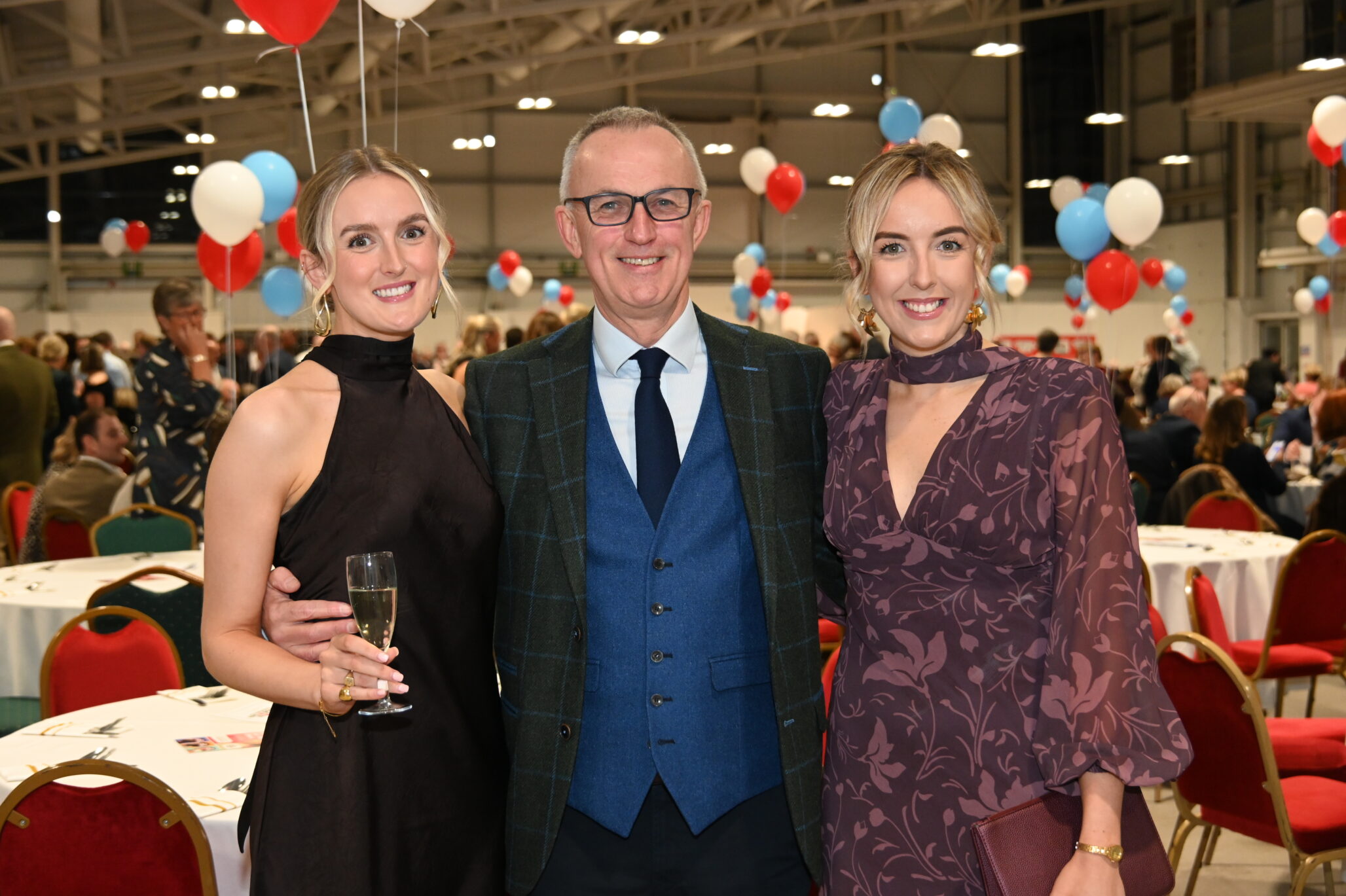
Gareth has always been a keen runner and Michelle would always support him from the sidelines. His daughters joined him in taking up running again during Covid-19.
Asked why they’d chosen to support The Brain Tumour Charity, Gareth, 62, said: “Michelle faced her diagnosis with remarkable positivity and determination. After the initial shock, we didn’t know where to turn, but The Brain Tumour Charity was exceptional in explaining our options and supporting us through an incredibly difficult time.
“As a result, we just felt we were doing everything we possibly could for Michelle. She did too and she took part in fundraising events for the charity which brought in about £20,000. Her goddaughter has also been diagnosed with a brain tumour, and the charity has been supporting her, so we want to help the families of the future too.”
Michelle started experiencing seizures in the spring and summer of 2023. After extensive tests and a biopsy, she was diagnosed with a glioblastoma, aggressive brain cancer, in February 2024 and began treatment at the Velindre Cancer Centre in Cardiff.
She also had hyperthermia therapy at the Welbeck Centre and outlived her prognosis of nine months.
Gwen said: “We were grateful for the additional time we had with mum, even though nothing will ever prepare you to lose someone you love. I don’t think I would be running the London Marathon if it wasn’t for something so special. But we’ve been doing quite a lot of training and Dad and El keep me going!”
Elin added: “We used to joke that mum had to be the bag carrier – waiting in the cold and rain with a packed lunch – but we knew she absolutely loved it and would never miss any of dad’s races. She’d always be on the sidelines, and she’d love the fact that we’re doing it together.”
Around 40 members of their family as well as friends and members of their local community are planning to head to London to cheer on the trio.
Faith’s story
It will never look as good on me as it did on her but that doesn’t matter – when I cross that finishing line in the Mall, a little bit of Lucie will come with me."
Faith
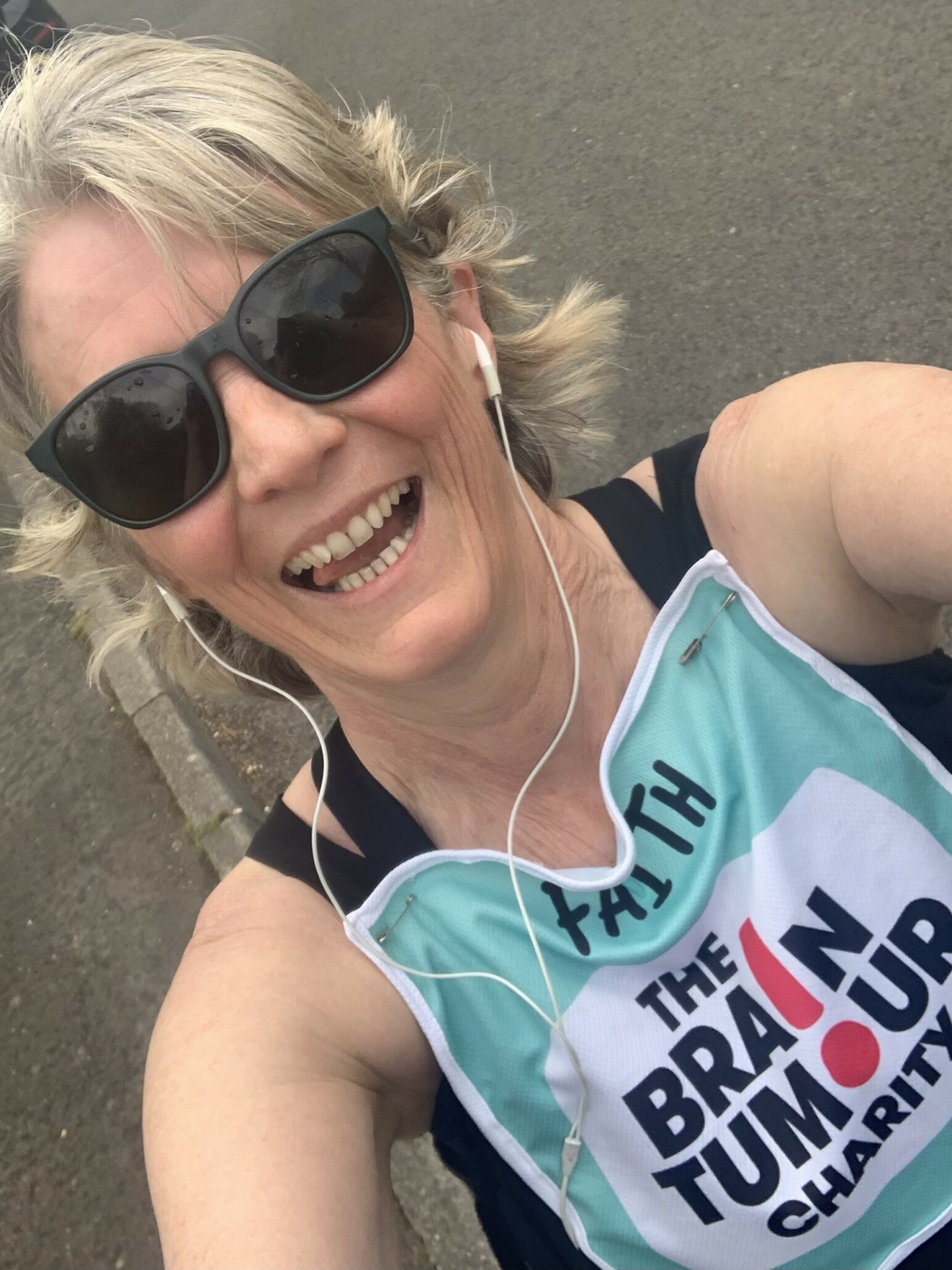
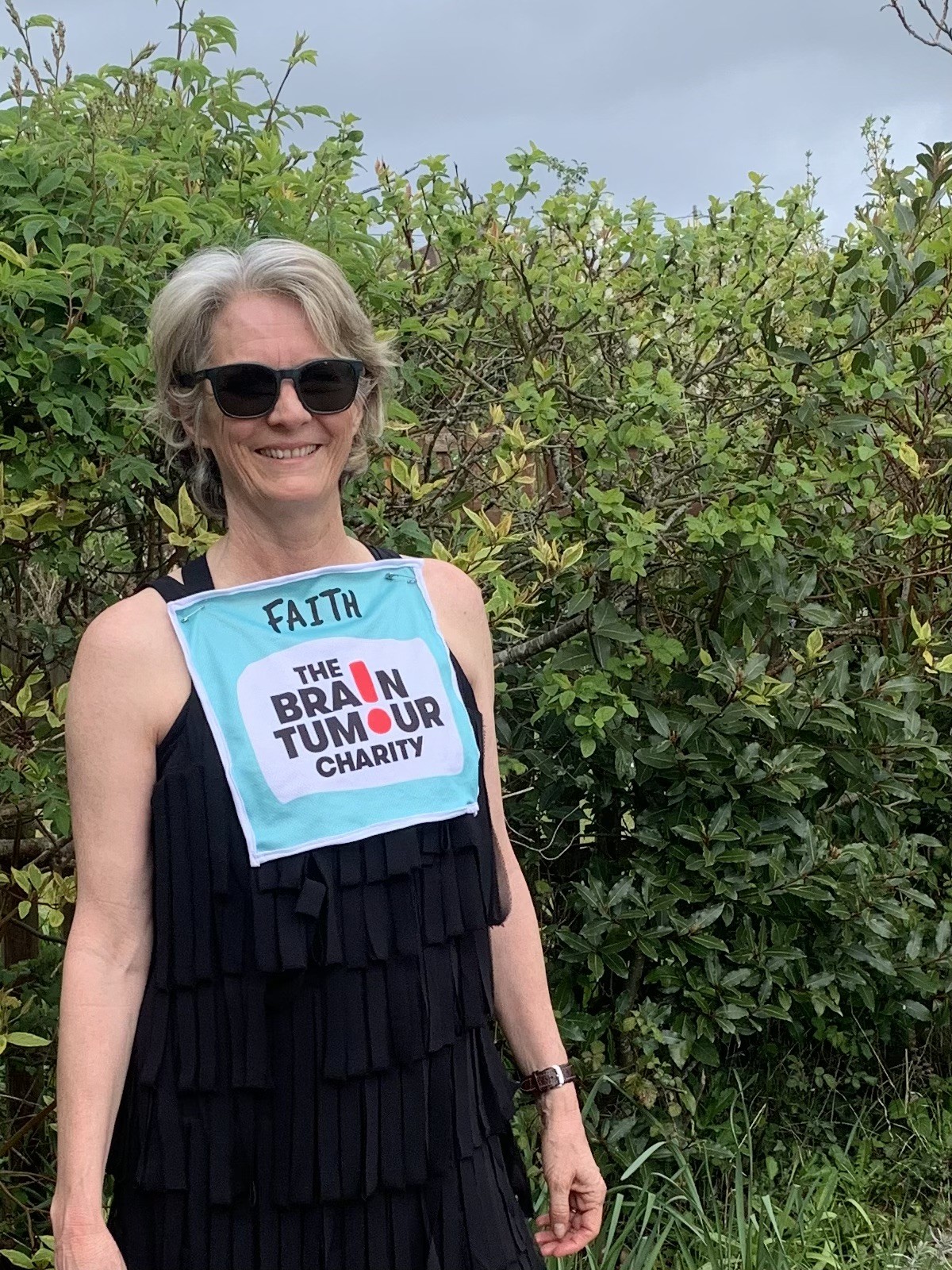
Novelist Faith Eckersall, from Hampshire, is running in a unique costume. In memory of her sister Lucie, she will be wearing Lucie’s party dress.
“In 2017 my beautiful and brilliant younger sister, Lucie, was diagnosed with glioblastoma multiforme,” Faith explains. “She survived just a few weeks after the diagnosis, and died, aged only 51, in December 2017.
To spare my parents, I offered to clear her London bedsit and, tucked in the wardrobe, I discovered a stunning black flapper mini dress. Its elegance and beauty seemed to encapsulate everything about Lucie which was now being torn from us.
Lucie and I were of similar build and had always swapped and shared clothes but after she died, I could never bring myself to wear that dress – it belonged to her. As a runner, I’d always dreamed of doing the London Marathon and applied for nearly eight years.
When, in summer last year, I received the magical ‘You’re In! email I knew immediately that I would run for The Brain Tumour Charity, which helped our family during our darkest time.
As a keen sportswoman, I know Lucie would have loved to do something like the London Marathon and so, in her honour, I decided that Lucie’s dress would have one more outing; not to any old occasion, but at an event where it could be seen by millions!
It will never look as good on me as it did on her but that doesn’t matter – when I cross that finishing line in the Mall, a little bit of Lucie will come with me.“
Faith is a novelist who has been fitting in her running around writing her second crime cosy novel ‘Death by Canape’, which comes out in early June.
Pippa’s story
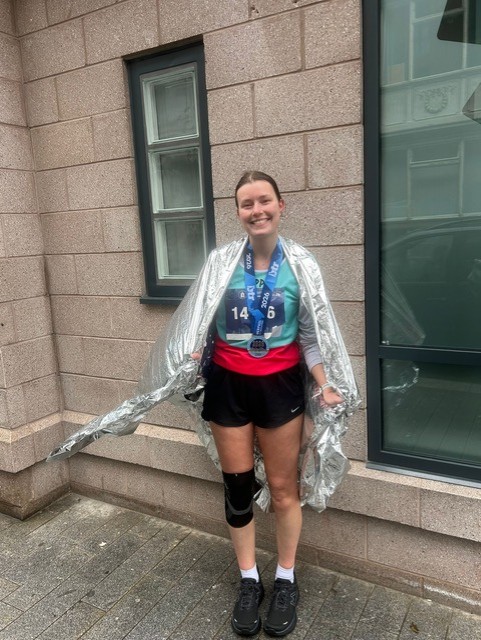
Running the London Marathon for my Dad means so much. It’s a way of doing something tangible in a situation where so much feels out of control. You can’t change the diagnosis, but you can raise awareness, fund research, and show support."
Pippa
As a scientist who has worked in brain cancer research, Pippa Wade understands brain tumours more than most. But nothing could have prepared her for a devastating diagnosis close to home. In December 2024, following a number of partial seizures, Pippa’s dad, Cameron, learned he had a glioblastoma – the most aggressive form of the disease in adults.
“Our world changed overnight,” said Pippa, 29.“I always knew treatment options were limited, but sitting in the room when a terminal prognosis is delivered, and hearing that there may not be another option if treatment doesn’t work, is shocking. Like many patients, my dad has had to look into treatment abroad, which often means spending life savings in the hope that something helps, and that just isn’t right. Nor is it fair.
“My dad’s a big family man, always at the end of the phone when you need him. He’s incredibly sociable and has an uncanny ability to make friends wherever he goes.
“So many people would crumble receiving a glioblastoma diagnosis, but he’s taken it on the chin. He’s refusing to wait around and is determined to live life the way he chooses, not have it dictated for him.”
Although active – her main hobby is hockey – Pippa never saw herself as a runner. “My Dad has said many times that if he had to pick out of my brothers and me who would run a marathon, he wouldn’t have picked me!” she said.
But training hard for the marathon has changed all that and she is looking forward to lining up with around 59,000 others to take on the 26.2 mile course: “If I’m being completely honest, I’m shocked I’ve made it this far and I’m only now picking up niggles, like minor shin splints. Training on the whole has been pretty smooth, and I’ve managed to fit the training block around my 9–5 quite easily.
“Running the London Marathon for my dad means so much. It’s a way of doing something tangible in a situation where so much feels our of control.
“You can’t change the diagnosis, but you can raise awareness, fund research, and show support. It’s also a way of honouring him, his determination, his resilience, and everything he’s done for me.
“I’m really looking forward to the atmosphere – everyone talks about how special London is and how there’s a real sense of collective purpose – I think knowing I’ll be running alongside thousands of people, many of them also supporting causes close to their hearts will be really motivating.
“I won’t lie though, I am dreading everything beyond 18 miles. Everyone says the last stretch is so unpredictable, it hurts and you’ll hit the wall – I’m mentally preparing to learn a lot about myself during those last miles and remind myself of my ‘why’!!
“Crossing that finish line will be overwhelming as it represents so much and has also been something to focus on over the last few months. Most importantly though, I hope it helps contribute to a future where brain tumour diagnoses come with better options, better outcomes, and more hope for families going through this.
Brain tumours remain one of the hardest cancers to treat. Survival rates for many types haven’t improved significantly in decades, yet they still receive a tiny fraction of the national cancer budget. That’s why raising awareness and funding is so important. Running the London Marathon feels like a small way to contribute to something bigger – supporting research, improving understanding, and hopefully helping families like mine.”
Pippa
Run the London Marathon
If you’re inspired by the stories of our brave runners and would like to take on the same task, you can apply for a charity place in the 2027 London Marathon by clicking the link below!
Apply to run the London Marathon for us!