
My world was turned upside down in January 2025 when my wife was diagnosed with a brain tumour. The shock was overwhelming. She’d had a couple of weeks of headaches – nothing more – and then suddenly one visit to A&E, as the pain became unbearable, changed everything. That time is unfathomably scary. We had no idea where to turn for advice, what to do next, or what any of it meant.
From the outside, it might appear like things move quickly. Within two weeks we met a brain surgeon, a remarkable individual at the heart of a remarkable team in Edinburgh Royal Infirmary. But he didn’t deliver good news. He was the first person to tell us the tumour was terminal. As everyone who has lived through that moment will know, it is beyond devastating.
Navigating post-diagnosis questions and the treatment journey
Questions come thick and fast, but everyone’s journey is different, and the answers can only ever be somewhat generic. One of the first things that helped us feel less lost was a pack from The Brain Tumour Charity, given to us by the oncology nursing team. Suddenly there was information we could trust. And when we reached out for support, we were met by genuinely wonderful people – calm, clear, and kind – who helped us understand what might lie ahead.
But nothing changes a prognosis of 9–16 months. And in our case, it got worse. Following a successful operation that removed more than half the tumour, the biopsy revealed a rarer form of glioblastoma with a possibly shorter outlook. No numbers were given but of course, we Googled them, and what we found was tough to read.
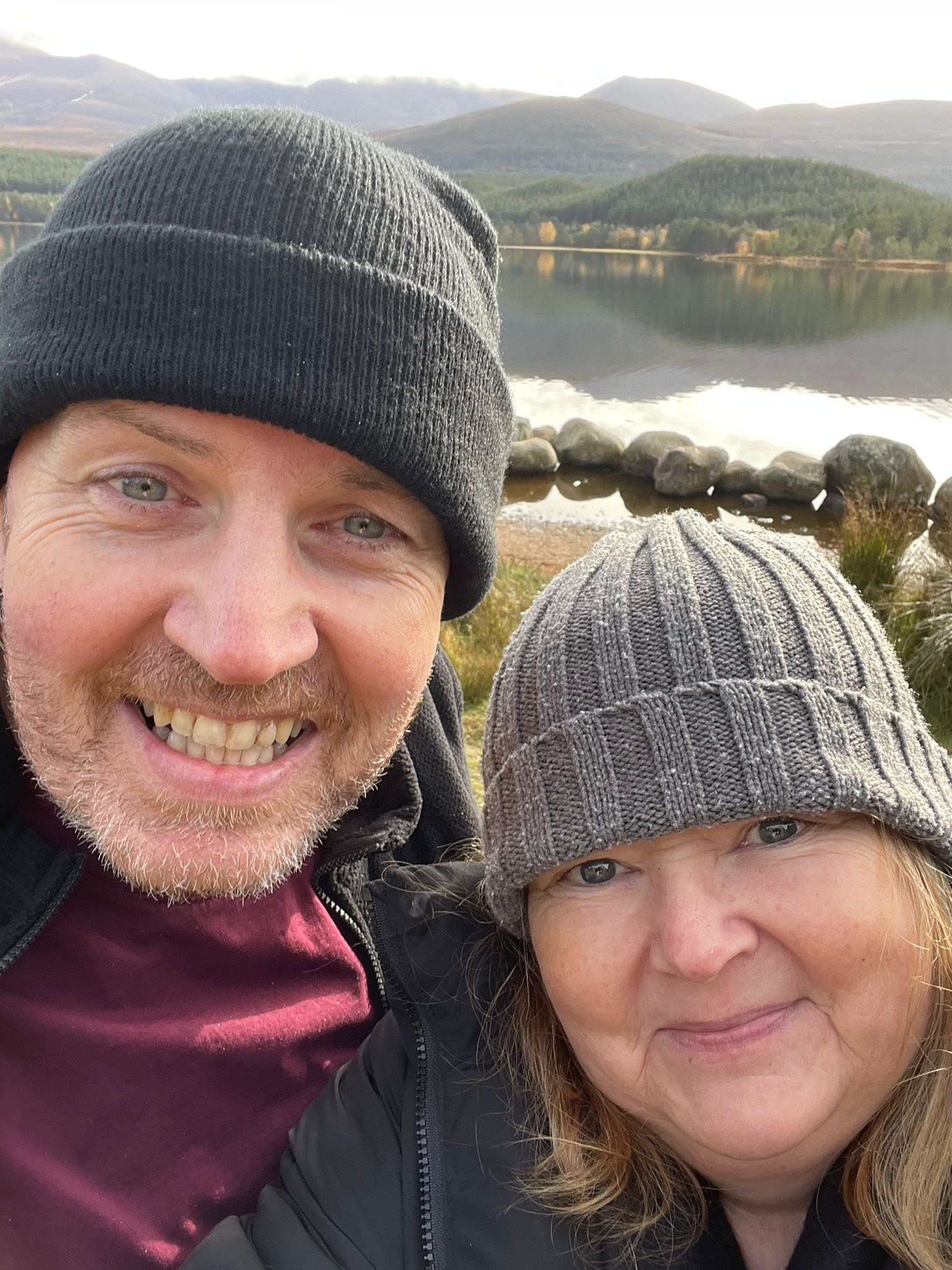
The first half of this year was consumed by surgery, radiotherapy and chemotherapy and a rollercoaster of side effects. Low blood counts, infections, delays. One of the biggest learnings for me has been that the treatment side effects can, at least for a while, be as difficult as the tumour itself. The NHS invests so much in managing those complications and we quickly realised we were far from the only ones facing them.
Holding on to hope
Through all of it, my personal focus has been hope. Hope for new treatments. Hope for clinical trials. Hope that my wife will somehow defy the statistics. I know the odds, but I refuse to give up.
We are extremely lucky to have a very experienced oncology team. I could not ask more from them professionally or personally. If anything, I just sometimes wish the approach could be more adventurous. When you’re facing a very short timeline, your appetite for risk changes and I’m not sure the system always recognises that.
Joining the Scottish Steering Committee
My determination to find a miracle led me to ask what I could do to help. I’m not a doctor. I don’t come from a medical background. But I needed to contribute. So when the opportunity came to join The Brain Tumour Charity’s Scottish Steering Committee (SSC) in August last year, I jumped at it.
I’ll admit I still feel out of my depth, most of the people around the table seem far better qualified than me but I absolutely love being involved. The current focus on speeding up diagnosis might not have been the first area I would have chosen, but now I understand its importance.
Campaigning for change
Over 70% of brain cancer diagnoses happen in emergency settings in Scotland. This must be investigated further but it may indicate that symptoms are being missed or misunderstood earlier on. As we all know, brain tumour symptoms can vary widely making it all the more challenging for clinicians. It all too often adds up to late discovery and as a result, fewer options.
Yet there are developments that could change that. There are innovations such as blood-test-style diagnostics in commercial development. Why wouldn’t we want that available? Why wouldn’t our health service want to pilot it?
I know the answer is likely money. Priorities. Capacity. But when brain tumours remain the biggest cancer killer of those under 40, we need, and deserve, greater investment.
I’m looking forward to campaigning for that change. For new tests. For better guidance for GPs. For earlier action. For more time for families like mine.
And in parallel, I hold onto hope. Hope for a miracle for my wife.