
On Friday 6 March, the Rare Cancers Bill recieved Royal Assent and officially became enshrined in law as The Rare Cancers Act.
We believe the Act will have transformative potential for people affected by brain tumours and have supported its passage through Parliament. We’ve been incredibly proud to stand with the MP who proposed the Bill – Dr Scott Arthur – and campaign alongside many other charities including Brain Tumour Research and Pancreatic Cancer UK.
What does the Rare Cancers Act aim to achieve?
The Rare Cancers Act is an important piece of legislation aimed at improving research, data collection and access to clinical trials for rare cancers – including brain tumours. It contains three substantive elements.
Element one
The first is reviewing the law on marketing authorisation for orphan drug designation.
This is intended to make sure the UK is a competitive regulatory landscape relative to other countries around the world and incentivise companies to bring products to market in the UK as soon as possible.
How could this impact people diagnosed with a brain tumour?
Many potential new interventions for brain tumours would be classed as orphan drugs.
By reviewing existing orphan drug legislation and comparing it with equivalent legislation internationally, we can make sure the UK is a welcoming landscape for these promising treatments to be launched.
This is vital in avoiding situations where medicines that can safely help people diagnosed with brain tumours are delayed or prevented from being made available in the UK.
Element two
The second is ensuring there is a coordinated and strategic approach to the delivery of research into rare cancers.
A key element of this is appointing a National Specialty Lead for Rare Cancers. This role would be responsible for identifying systemic issues blocking progress in the delivery of research for rare cancers. As well as working with the affected communities to encourage and facilitate more research.
How could this impact people diagnosed with a brain tumour?
Appointing a National Specialty Lead for Rare Cancers will help identify and address some of the barriers preventing research into brain tumours from happening.
Having somebody be pro-actively responsible for this will hopefully avoid situations like the long delay between the £40m of funding for research into brain tumours being announced in 2018 and that funding being awarded to specific research projects.
Element three
The third is focused on helping clinical trials successfully recruit participants in a timely manner. It aims to do so by making it easier to connect people establishing clinical trials and people diagnosed with rare cancers.
How could this impact people diagnosed with a brain tumour?
One of the things we most often hear from people affected by a brain tumour is that they want more opportunities to take part in research.
Despite this appetite for participation, less than half of respondents (42%) to our Improving Brain Tumour Care Survey said they’d been informed of potential research opportunities. And just 12% were able to participate in a clinical trial.
Making it simpler to connect people organising clinical trials with people diagnosed with brain tumours, doesn’t just encourage higher participation. It also encourages greater investment in research into brain tumours because recruitment becomes less of a barrier.
Does the Rare Cancers Act affect the entire UK?
The first element of the Rare Cancers Act extends and applies to the whole of the UK. However, the other elements only apply to England.
How have we supported the Rare Cancers Act?
We’ve been involved at every step as the Rare Cancers Bill progressed through Parliament, including attending the first roundtable convened by Dr Scott Arthur MP and Brain Tumour Research.
Since that first meeting, we’ve helped shape the legislation as it currently stands and helped make sure the needs of the brain tumour community are considered. We’ve offered robust challenges to push back but also provided advice on where compromise is a practical course of action.
Additionally, there have been moments of jeopardy for the Bill. To support its passage, we’ve helped to mobilise the community at times of need, with all charities encouraging members to push MPs for their support.
Paying tribute to Dr Scott Arthur MP
Between 2010 and 2024, less than 5% of Private Members Bills received Royal Assent. Without Scott’s leadership, the Rare Cancers Bill likely wouldn’t have reached this stage and now be enshrined in law as The Rare Cancers Act.
From day one, Scott has not only been completely open to receiving input from charity partners like us, but he’s strived to do it wherever possible. He’s also worked closely with the Department of Health and Social Care to make sure the Bill received widespread support in Parliament and is set up to make a measurable impact for people affected by brain tumours. We remain eternally grateful to Scott for this.
To listen to a conversation with Scott on Episode 66 of our podcast, click here.
What happens next?
Now that the Rare Cancers Bill has been enshrined in law as The Rare Cancers Act (2026), the next step is implementation.
It’s essential that once the National Specialty Lead for Rare Cancers is appointed, they begin a dialogue with the rare cancer community and formulate a strategy. Decisions will need to be made that won’t advance every rare cancer at once and they will need to be clearly communicated to all stakeholders to prevent a vacuum being created.
Somebody will need to be appointed to lead the review of the UK’s orphan drugs legislation. The terms of reference for the review will need to be decided to define its scope, objectives, timeline and governance. It’s essential that a broad range of stakeholders are invited to participate, including industry, charities and academia.
It’s vital that the review doesn’t look at the orphan drugs legislation in isolation. There needs to be an understanding of how it can work effectively with existing dedicated pathways for drug development and specialist reimbursement. This will help make sure the recommendations are successful in strengthening the UK as a life science superpower and transforming us into a more inviting market to launch new drugs.
To increase participation in clinical trials, clinicians and charities will need to be included in plans to make it simpler to connect trial organisers and people diagnosed with brain tumours. This will ensure these plans can effectively plug into clinical practice so that clinicians are able to use the data. These plans will also need to work effectively alongside existing initiative, like our ACT-BT panel.
The Rare Cancers Act isn’t a magic wand that will solve everything overnight. But it represents meaningful progress for a community that’s felt left behind far too often.
We believe it won’t just deliver short term gains for people diagnosed with brain tumour. With the right implementation it can provide a sturdy foundation for even more substantial progress to be made in the future. And we stand ready to play our part in that!
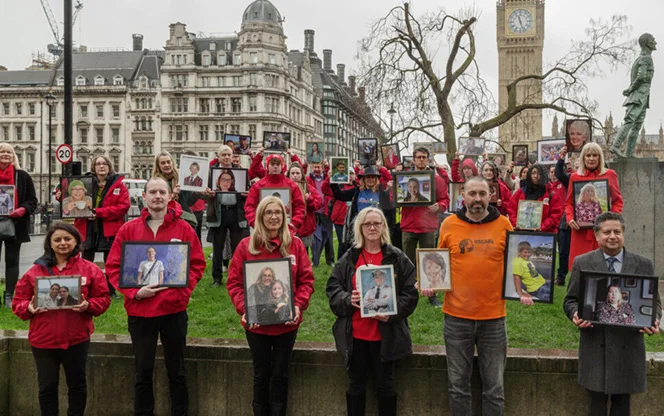
Learn more about our campaigning
We’re constantly pushing policy makers to make decisions that improve outcomes for people affected by brain tumours.
Click the button below to learn more!