Eight recommendations to unlock brain tumour innovation in the UK
Our new report explains how to unlock brain tumour innovation in the UK and the systemic barriers holding it back.
By Glenn Saitch
Brain tumours remain one of the most devastating and least survivable diseases in the UK. Despite a community that’s passionate about accelerating change and the UK’s strong scientific base, people diagnosed with brain tumours are struggling to access new treatments and technologies because of systemic and structural barriers.
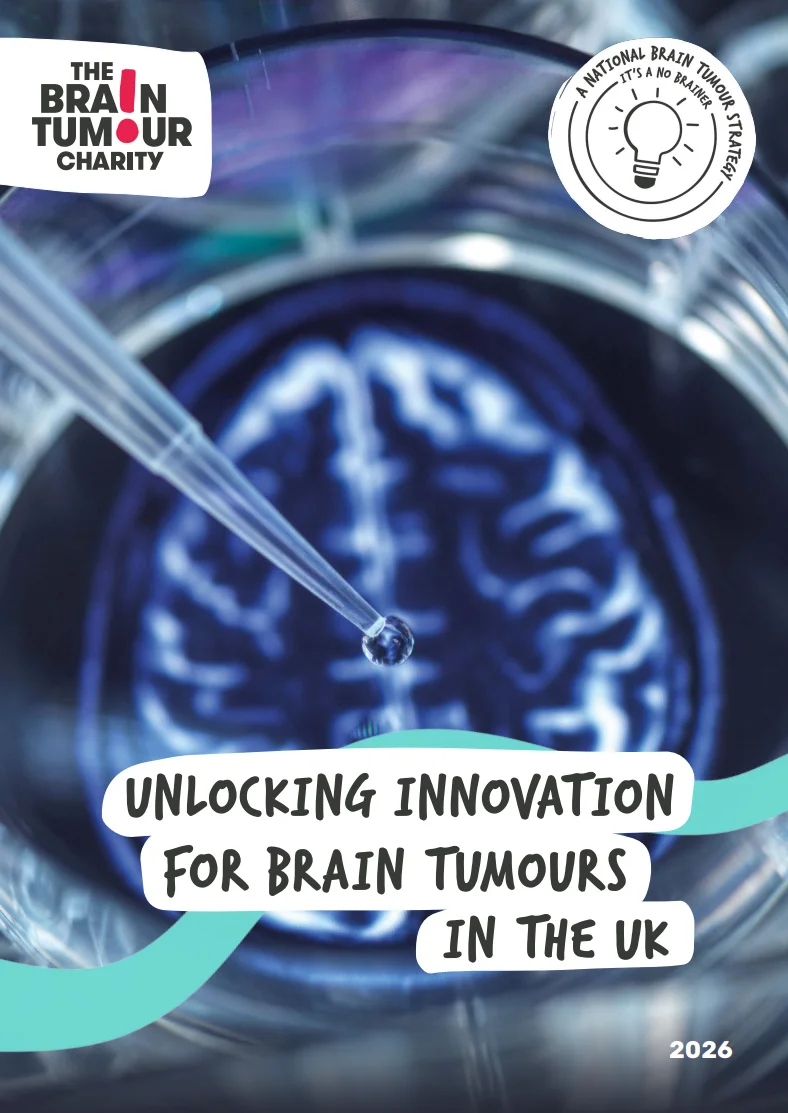
In our new report: Unlocking Innovation for Brain Tumours in the UK we’ve broken down some of the key barriers faced by those attempting to deliver innovative new medicines and devices. The report also highlights some of the barriers that the brain tumour community faces in safely accessing innovative new medicines and devices.
We’ve made eight recommendations that can help improve how innovation is delivered in the UK. With coordinated national leadership in the form of a National Brain Tumour Strategy, we believe these changes will help make sure that people affected by brain tumours are able to benefit from the incredible research happening across the globe.
The real-world impact on people affected by brain tumours
Despite there being an appetite for participation in research, less than half of respondents (42%) to our Improving Brain Tumour Care Survey said they’d been informed of potential research opportunities. And just 12% were able to participate in a clinical trial.
In this new report we highlight how people are prevented from accessing clinical trials and new treatments because of financial pressures, difficulties in accessing and understanding information about participating in research and lack of opportunities to participate in research locally.
I hear so often that they’re remortgaging the house or putting them and their family into financial instability, which I get because they’re going to want to seek anything that could potentially help which could be groundbreaking.
Neuro-oncology Clinical Nurse Specialist
Unlocking barriers to development
Research into brain tumours is undeniably underfunded in the UK. However, the systemic barriers preventing new medicines and devices from reaching people diagnosed with brain tumours are far more complex.
From fragile funding systems and misaligned incentives to regulatory uncertainty and missed opportunities for collaboration, our report lays bare how these structural issues are preventing new treatments and technologies from reaching people diagnosed with brain tumours.
You devise your trial, but the industry partner holds the cards in terms of the product development and if it’s a product which isn’t going to have a market in adults, then the history of the field is littered with these instances where industry has simply dropped development and the trial has fallen over the final hurdle before it even starts.
Researcher, Paediatric Brain Tumours
Unlocking barriers to delivery of innovation
Even when promising new medicines and devices are developed, many people living with a brain tumour in the UK are still unable to access them.
Unlocking Innovations for Brain Tumours in the UK examines where regulatory, appraisal and commissioning processes are creating barriers to faster, fairer access to new treatments and technologies.
The challenge remains and has always been the case that for treatments in rare disease areas proving cost effectiveness is a challenge and how NICE methodologies take those things into account especially for rarer cancers.
Health Body Representative
Eight key recommendations for unlocking brain tumour innovation
Governments across the UK should establish a national framework for structured collaboration between universities, funding bodies, industry and clinical settings to accelerate the translation of research into brain tumours into patient-ready innovation.
The Medicines and Healthcare products Regulatory Agency (MHRA) alongside reimbursement bodies should publish a clear, stage-specific regulatory roadmap for early-stage and rare disease innovation.
NHS bodies should designate research into brain tumours as a clinical priority and allocate protected research time within neuro-oncology roles.
Health technology assessment bodies across the UK should broaden appraisal criteria so that assessments of brain tumour innovations reflect their wider social and economic impact.
Health technology assessment bodies should introduce a sliding scale of acceptable cost-effectiveness levels between routine appraisals and Highly Specialised Technologies.
National system leaders should create a single, coherent access framework for brain tumour innovations covering medicines, medical devices, diagnostics and hybrid technologies.
Integrated Care Boards and relevant bodies in the devolved nations should commission a coordinated Rare Disease Service Model, led by a dedicated Rare Disease Innovation Lead.
Governments across the UK should publish and implement a National Brain Tumour Strategy that provides clear accountability for progress across diagnosis, care, treatment and research.
Read the report
Learn more about the above recommendations by reading our Unlocking Innovations for Brain Tumours in the UK report.
Through progress, we can make sure that people affected by brain tumours get kinder treatments and improved quality of life.