A diagnosis that changed everything
When your child is diagnosed with an inoperable brain tumour, your world changes in an instant.
Our daughter, Felicity, was 12 when we found out she had a low-grade brain tumour deep within her thalamus. Because of its location, surgery was not an option. Like many families in this situation, we suddenly found ourselves navigating fear, uncertainty and difficult decisions about treatment.
Living scan to scan
Before her diagnosis, Felicity had been experiencing headaches, and double vision. She eventually went for an MRI scan which revealed that she had a tumour and fluid on her brain.
She needed surgery to fit a shunt to drain that fluid and relieve the pressure building up inside her skull. And to take a biopsy to confirm – we hoped – that it was slow-growing, and to identify any genetic markers. This later became crucial to her care and treatment.
When an MRI scan in April 2025 showed that Felicity’s tumour had grown by 65%, we were devastated. For months, we had been living scan to scan, hoping for stability. Instead, we were told the tumour was growing and that chemotherapy was likely to be the next step.
Worries about treatment
As parents, the thought of our teenage daughter having to undergo chemotherapy was terrifying.
We worried about what it would do to her physically and emotionally. We worried about the impact on her education, her friendships and her quality of life. Most of all, we worried about watching our daughter face yet another challenge in a journey that had already been unimaginably difficult.
Like many people, we associated chemotherapy with hospital appointments, sickness, exhaustion and the loss of normal childhood experiences. It felt as though the life Felicity had fought so hard to hold onto was about to be put on hold.
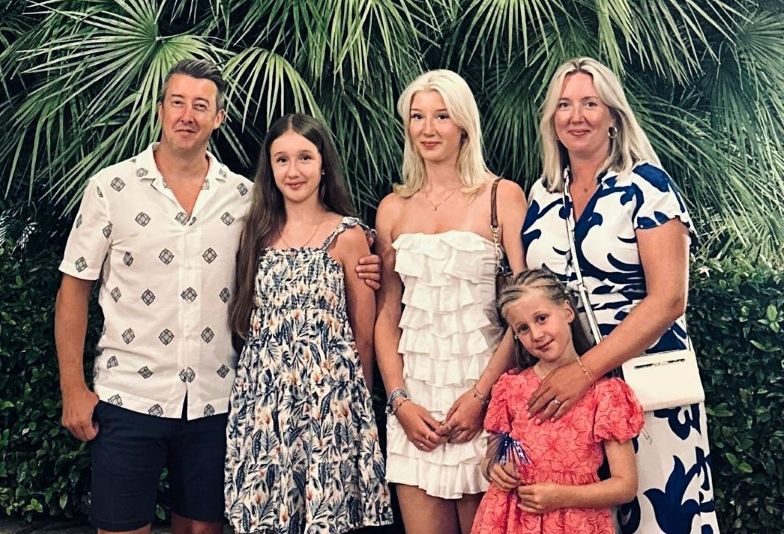
We also worried about her sisters. At the time, they were 17 and seven years old. Our eldest, Lex, was navigating college and her own future while watching her sister face a life-changing diagnosis. Our youngest, Hermione, was still trying to understand why her sister was ill and why so much of family life suddenly revolved around hospital appointments, scans and uncertainty.
Targeted therapy: a profound turning point
Like many families, we were trying to protect all our children while coping with our own fears. We knew that chemotherapy would not only affect Felicity; it would affect every aspect of family life.
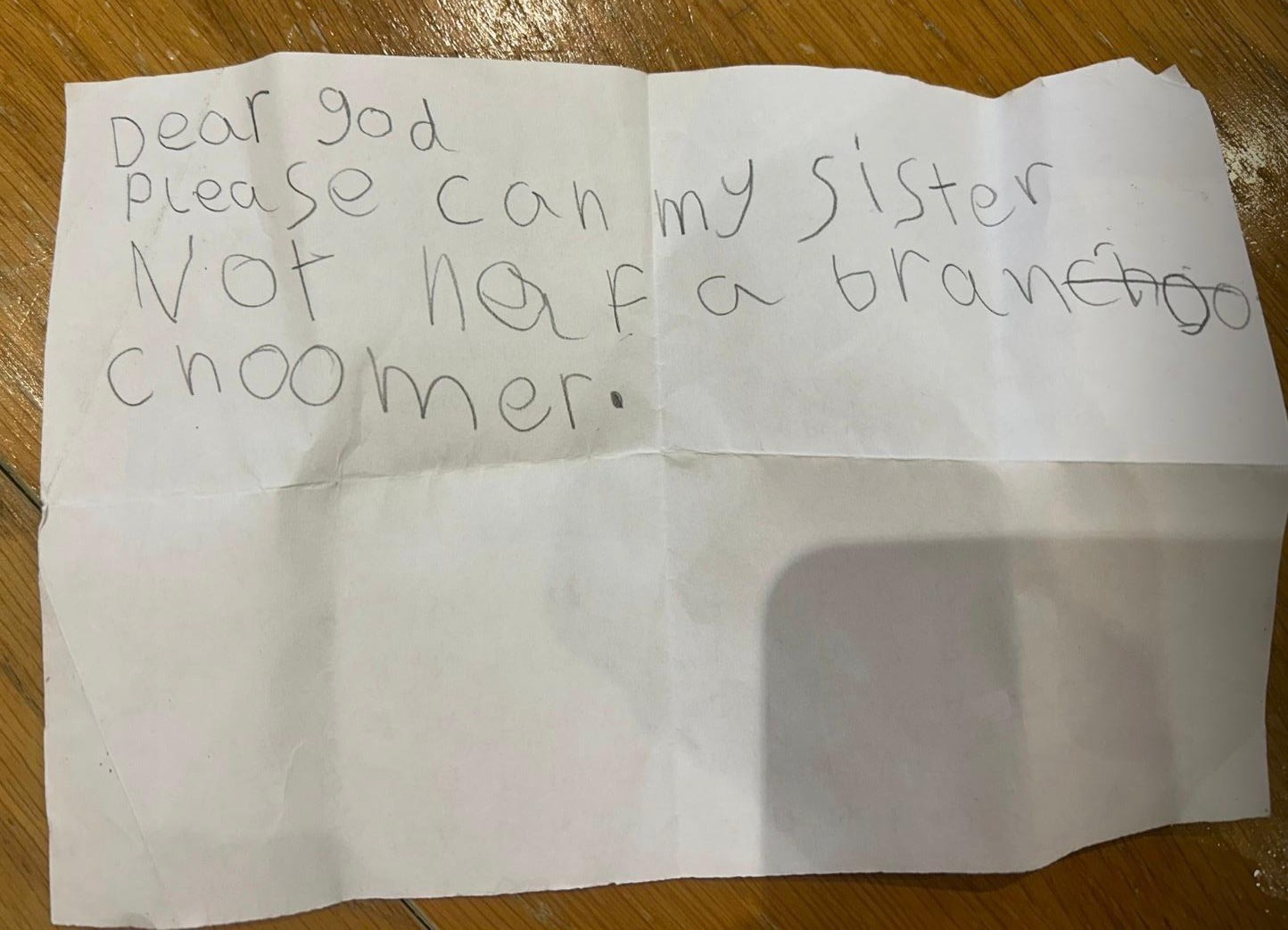
When Felicity was diagnosed, Hermione was just six. At school she wrote a prayer that said: ‘Dear God, please can my sister not have a brain tumour.’
Those words have stayed with us ever since. That is why access to targeted therapy was such a turning point for our family.
Following the biopsy, we learned that Felicity’s tumour carried a BRAF mutation. This opened the door to a treatment option that has transformed her life: targeted therapy using the MEK inhibitors dabrafenib and trametinib.
In our family, we jokingly call these tablets “Deborah and Tiffany” because their real names are such a challenge to pronounce! But behind the joke lies something incredibly important. These tablets have given our daughter the opportunity to continue being a teenager and to live a relatively normal life.
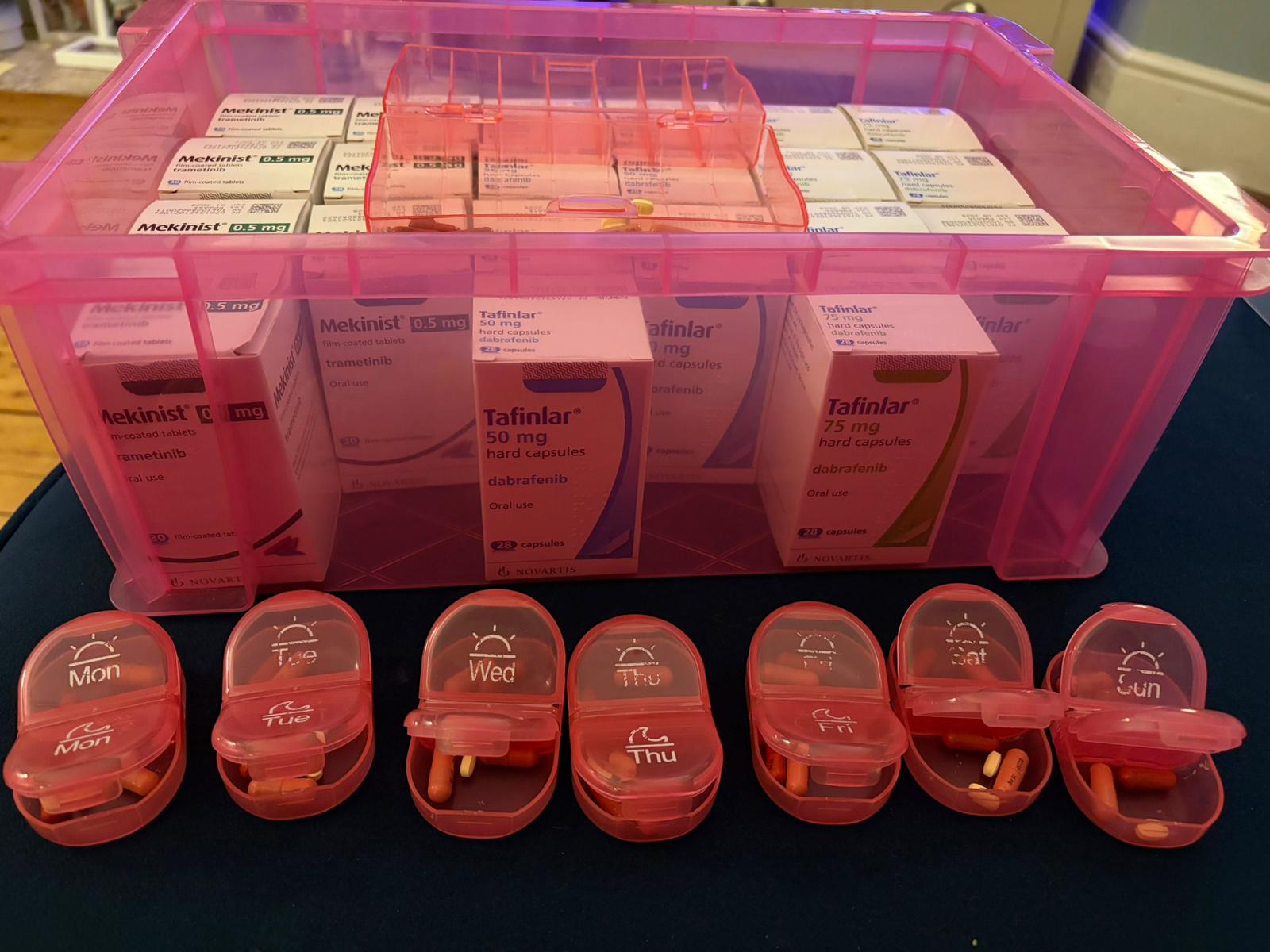
Instead of having regular chemotherapy infusions, Felicity can take some tablets at home.
While these medications have side effects and require ongoing monitoring, they have allowed her to live a life that is remarkably normal considering that she’s a teenager living with an inoperable brain tumour.
She still goes to school. She spends time with friends. She is preparing for her GCSEs. She makes plans for the future. The treatment has not defined her life in the way we feared chemotherapy might.
For our family, the difference has been profound.
Our gratitude
We are incredibly grateful to the scientists who identified the BRAF mutation, the researchers who developed these treatments, the fundraisers and supporters whose contributions made that research possible, and the clinicians who have worked tirelessly to bring innovative treatments to patients.
We are also thankful to the decision-makers who enabled these drugs to be prescribed within the NHS and to the teams at Southampton Hospital who made access to treatment possible for Felicity.
We also want to thank The Brain Tumour Charity for raising awareness, funding research and campaigning for better treatment options. It was through their efforts that we first recognised the seriousness of Felicity’s symptoms and sought the investigations that, ultimately, led to her diagnosis.
Why access matters for every family
But we know that many other children and families are not yet benefiting from advances like these. No child should have to endure more invasive treatment if a more effective, targeted alternative exists.
Access to innovative therapies should not depend on where a child lives or which hospital they attend. Families facing a brain tumour diagnosis deserve access to the best available treatments, delivered as quickly and equitably as possible.
We are sharing Felicity’s story because we want more children to have the same opportunity she has had: the opportunity to continue living their lives while receiving treatment.
Today, Felicity still lives with an inoperable brain tumour. We do not take a single day for granted. But thanks to targeted treatment, she has been given something every family hopes for after a diagnosis like this: time, normality and hope.
For that, we will always be grateful.
Charlotte and Dan Hughes