
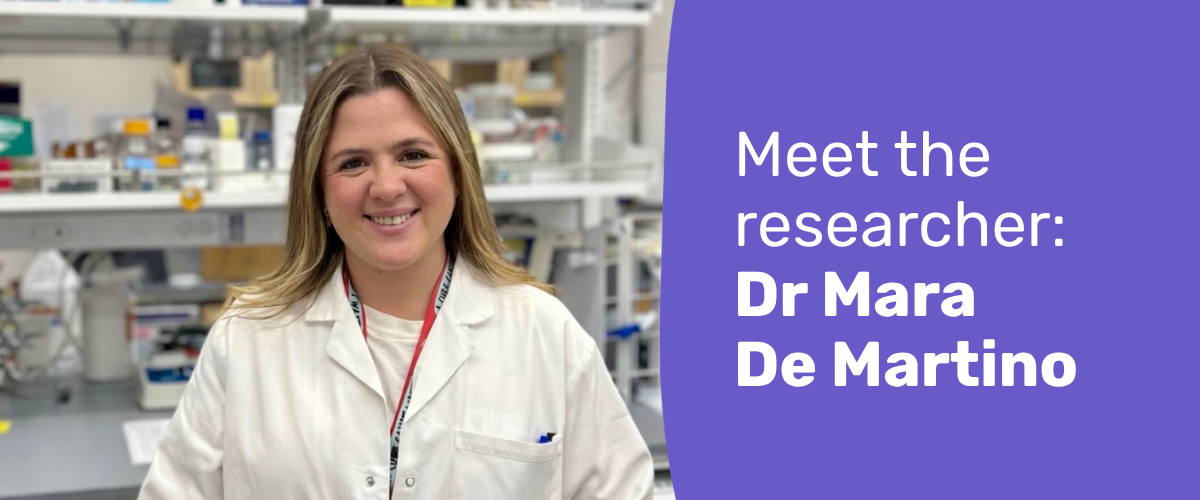
Dr Mara De Martino is among the most promising scientists in the brain tumour field.
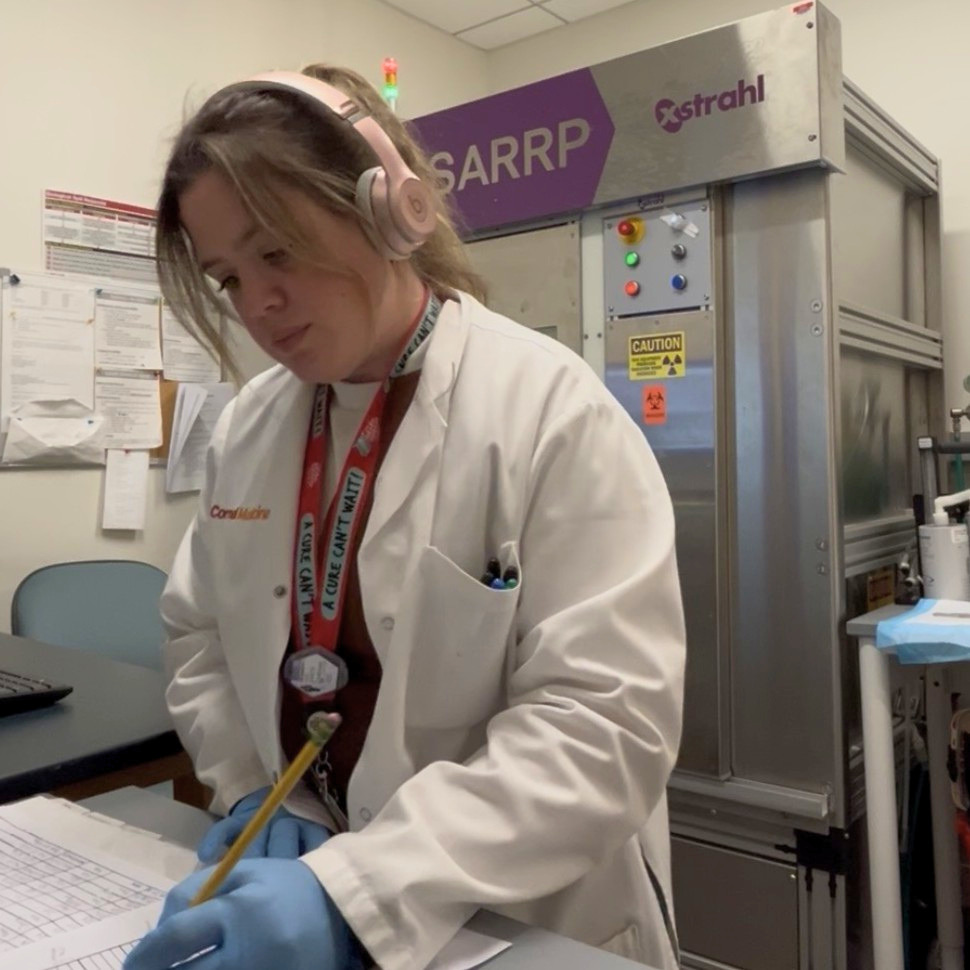
We awarded her a place on our Future Leaders programme in 2023, providing funding for a research project at Weill Cornell Medicine in New York. She investigated how glioblastomas process fats, and whether this helps to protect them against treatment and the body’s immune system.
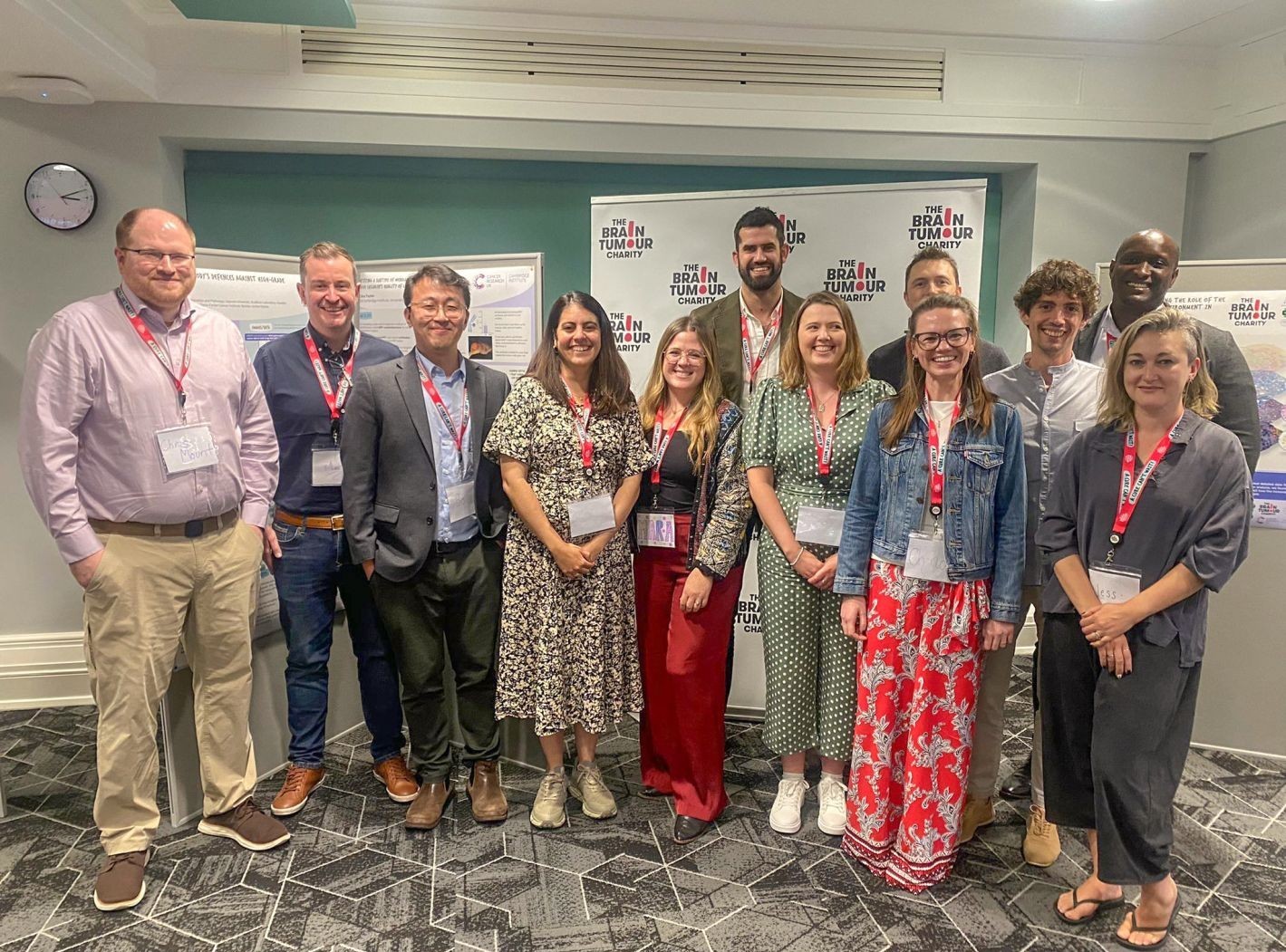
Now, Mara is striving towards an independent research career. She has moved to the UK to start her research programme at University College London (UCL), mentored by Professor Simona Parrinello and Professor Sergio Quezada. She met Professor Parrinello for the first time at our Future Leaders in Focus event last year.
Mara De Martino: Becoming a researcher
Like most scientists, Mara is driven by curiosity. She felt drawn to a research career so she could learn new things and do something different every day. Learn more about Mara here:
During Mara’s PhD at the University of Buenos Aires, she worked on a specific pathway in breast cancer. Then she came across a lab at Weill Cornell Medicine studying the same pathway in brain tumours and made the move from Argentina to New York.
“I successfully applied for a postdoctoral position there,” Mara explains. “Brain tumours are some of the hardest tumours to treat, and I really wanted to help find better options.”
“A great opportunity”
As one of our Future Leaders, Mara received an award of £225,000 over three years (January 2023 – December 2025). In the laboratory, she found that radiotherapy causes brain tumour cells to change how they use fats. This helps them survive treatment and avoid being attacked by the immune system.
While further research is needed, these findings suggest that targeting specific fat-related pathways could be an effective treatment strategy for glioblastoma.
I applied for the Future Leaders programme as I knew it was a great opportunity to establish myself as a researcher in the brain tumour field. It turned out to be completely life-changing.”
Mara
“Beyond the financial support offered, the network itself is really valuable. I’ve made some great connections with other researchers and benefited from being able to engage with The Charity’s Involvement Network.”
Find out more about Mara De Martino’s Future Leaders Award
Moving to the UK
Mara recently began working as a Transition Senior Research Fellow at the Cancer Research UK Brain Tumour Centre of Excellence.
In this role, Mara will receive support for a three-year independent research project. Importantly, she will have access to tumour samples collected from patients to take this work forward.
Mara explained: “We’re trying to understand why brain tumours, particularly glioblastomas, come back after treatment. How do the cells in these tumours adapt? And what is the role of the tumour microenvironment? Our goal is to answer these questions and find new treatment targets.”
One thing that’s stood out to Mara so far is how collaborative the UK’s research community is, with opportunities for universities to share data and resources.
Mara De Martino’s career goals
Mara’s long-term goal is to become an independent researcher and open her own lab.
Ultimately, I want to better understand why these tumours are so difficult to treat. But I know that I can’t do it alone. Hopefully I’ll have my own team of ‘Future Leaders’ to mentor one day!”
Mara
Learn more about our Future Leaders programme
To find out more about this step-changing funding programme, click the button below: