Neurolase: Making brain tumour surgery safer through the Cancer Tech Accelerator
As part of the Cancer Tech Accelerator, we’ve awarded Neurolase £50,000 to advance a laser-based tool that could help make brain tumour surgery more precise.
By Matt Simpson
The Cancer Tech Accelerator (CTA) supports projects that enhance cancer detection, diagnosis and treatment. It is helping to ensure that promising ideas and innovations can benefit people with cancer as soon as possible.
Of the five projects awarded funding through the CTA in 2025, three focus on brain tumours. This includes a project funded by us and a further two projects funded by Cancer Research Horizons. See the full list here
Improving brain tumour surgery
As part of the CTA, we’ve awarded Neurolase £50,000 to help develop a device that could improve the safety and effectiveness of brain tumour surgery.
The medtech company’s promising, non-invasive approach combines Artificial Intelligence (AI) and laser light to help surgeons distinguish between healthy tissue and tumour tissue.
Removing more tumour tissue is associated with increased survival and a reduced risk of the tumour coming back. Improved symptoms and quality of life are also possible due to healthy brain tissue not being unnecessarily removed.
How does Neurolase’s technology work?
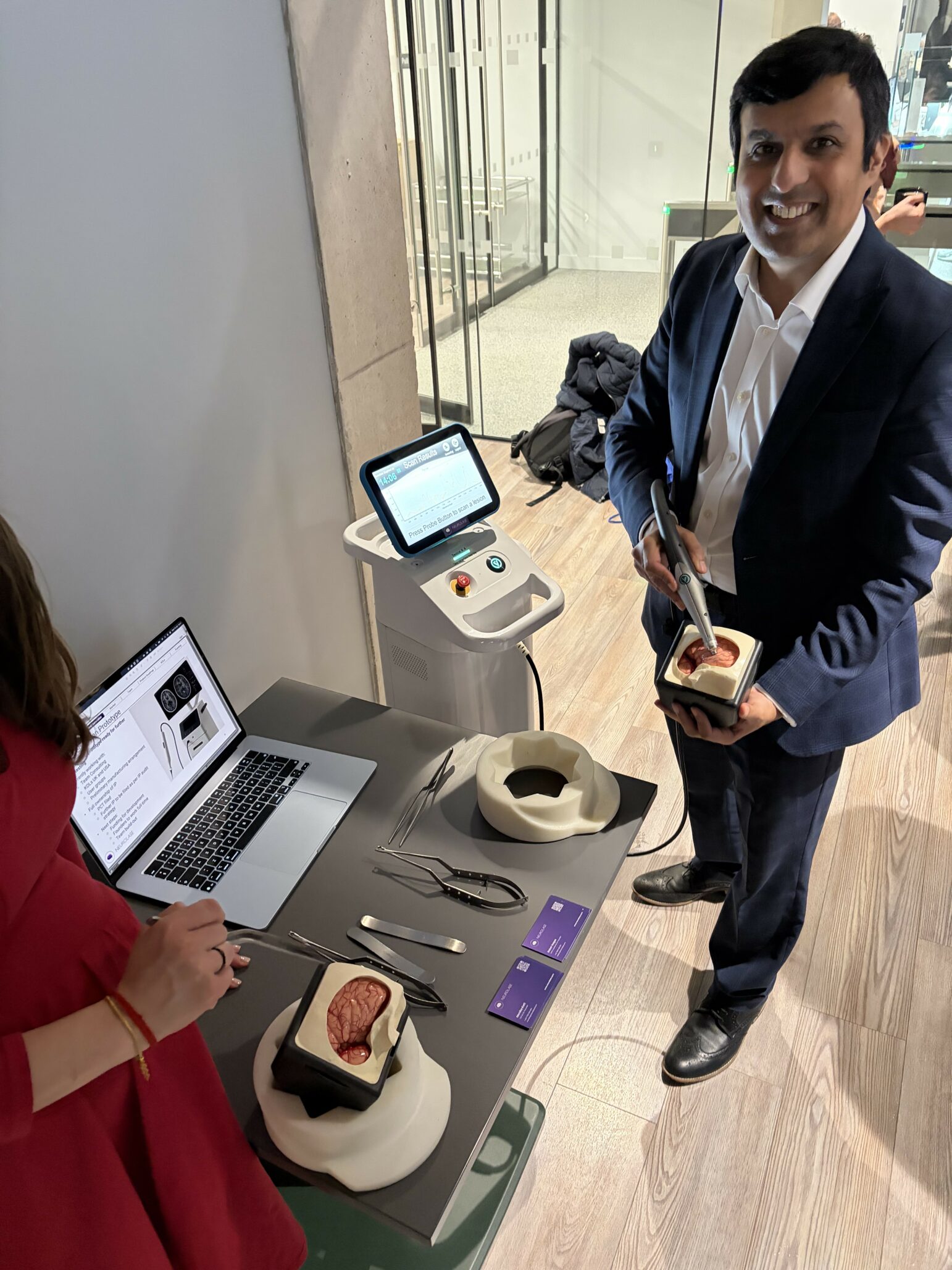
Neurolase has developed a handheld device – shaped like a pen – for use during surgery. It is easy to use and requires minimal training.
Dr Babar Vaqas with the Neurolase probe
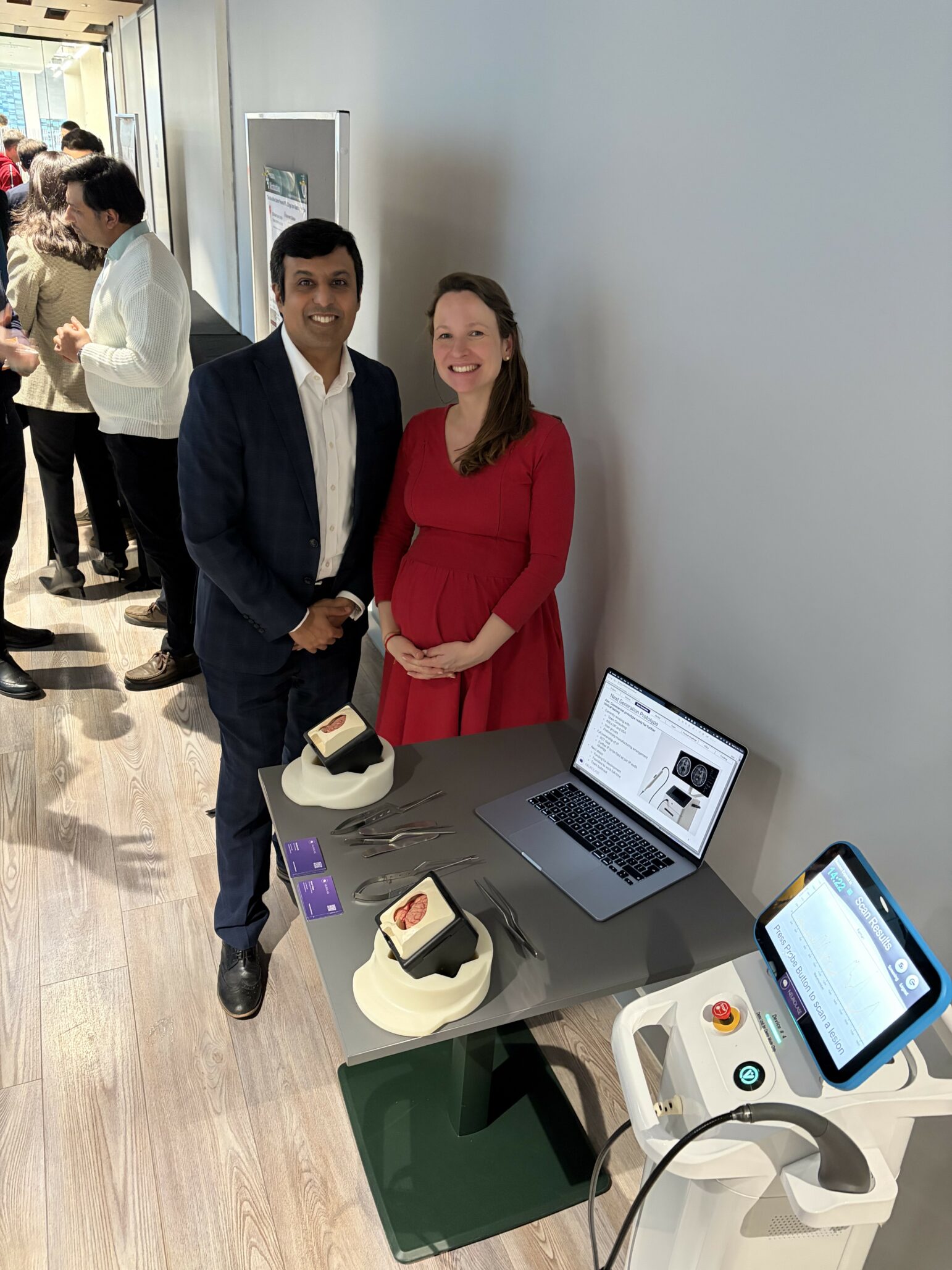
Dr Babar Vaqas and Monika Kott, the founding team of Neurolase
The device shines laser light onto the brain to measure vital information about the chemical make-up of tissue in and around the tumour. That information is then put into an AI model to generate fast, logical predictions that can help guide decision-making in real time.
Neurolase is a powerful surgeon-invented solution, developed to address a real crucial need for improved safety and survival for those with brain tumours that I experienced during my training as a Neurosurgeon. It has the potential to revolutionise brain tumour surgery, ensuring every patient’s surgery is performed to the highest standard every time.”
Dr Babar Vaqas, Co-Founder and Chief Medical Officer at Neurolase
Promising results
Neurolase’s device showed promising potential in a first-in-human study involving 30 patients. This took place at Charing Cross Hospital.
Researchers used the device to collect over 1,000 pieces of data, including molecular measurements of tissue.
Analysis in the lab suggests the device accurately identified tissue type 94% of the time. Most surgeons currently rely on experience and “feel” to distinguish tumour from healthy brain tissue, with a reported accuracy of between 70 and 80%.
We are pleased to fund this innovative approach. Bringing together advanced technologies with AI to create new surgical tools is a powerful example of how research can translate into real clinical impact. It has real potential to support surgeons in making more confident decisions. Ultimately, we hope it will contribute to safer procedures and better outcomes for people diagnosed with a brain tumour.”
Dr Simon Newman, Chief Scientific Officer at The Brain Tumour Charity
Taking part in the Cancer Tech Accelerator
Set up in 2021, the CTA aims to help researchers fast-track their innovations towards commercialisation. Find out more
Run by Capital Enterprise, and backed by Cancer Research UK and Cancer Research Horizons, the programme provides specialised workshops, mentorship and award funding pathways to help move research from the lab to the clinic. We are a partner charity, as are Blood Cancer UK.
The support we received was instrumental: the rigorous process of selection helped validate us as a big-impact and promising technology, and the funding and network support we received continues to be vital for developing the next version of our system.
Monika Kott, Co-Founder and CEO at Neurolase
Through the CTA, we have previously helped fund a project focused on speeding up brain tumour diagnosis through liquid biopsies. Find out more
The programme received 89 applications this year, with 48 of those joining the week-long bootcamp that took place in April. We look forward to following their progress!