
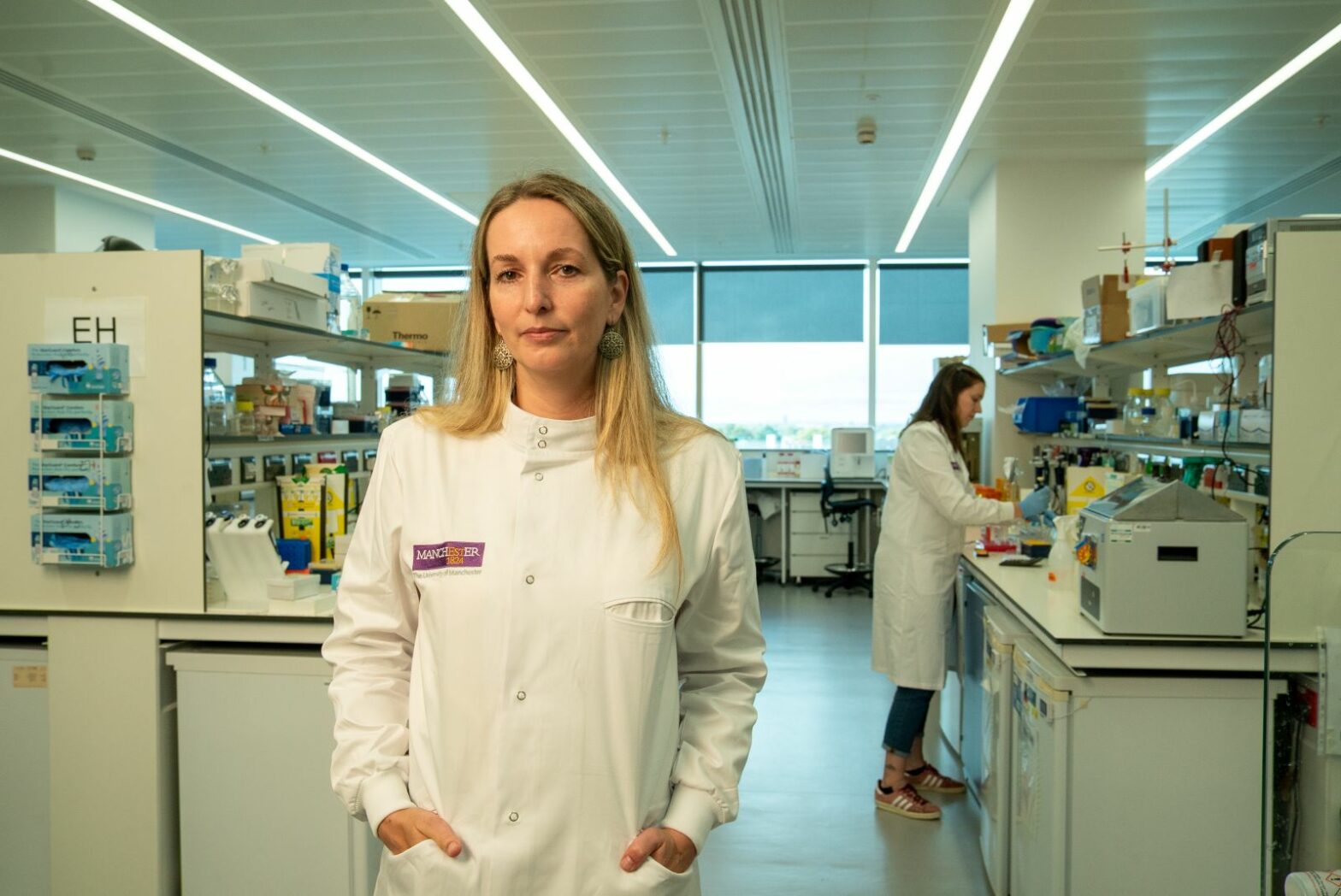
Researchers in Manchester have developed a new blood-based method that could help diagnose and monitor glioblastoma in the future.
The study, published in Neuro-Oncology Advances, provides early evidence that a pair of proteins circulating in the blood can detect glioblastoma with more than 96% accuracy. Insights can also be gained into how the disease responds to treatment, meaning the approach could one day reduce the need for repeated invasive procedures.
This work was led by Professor Petra Hamerlik, The Brain Tumour Charity Chair of Translational Neuro-oncology, at the University of Manchester. We provided the funding, along with the Danish Cancer Society and the NovoNordisk Foundation in Denmark.
What is glioblastoma?
Glioblastoma is the most common and most aggressive form of brain cancer in adults.
Often diagnosed late, glioblastomas are incredibly difficult to treat due to their complex make-up and rapid progression. They almost always grow back, even after intensive treatment.
At present, diagnosis and follow-up rely largely on MRI scans and invasive surgical biopsies. But these techniques can miss early changes and cannot be repeated frequently. This means that clinicians often struggle to determine in real time whether a treatment is working or whether the tumour is beginning to return.
Detecting glioblastoma
The new research shows that two proteins carried in the blood – coagulation factor IX (F9) and cartilage oligomeric matrix protein (COMP) – form a powerful “dual-marker” signature. This distinguishes patients with glioblastoma from healthy individuals with high accuracy (over 90%).
The research team collected samples from patients during surgery, radiotherapy and chemotherapy. The markers showed dynamic changes, reflecting treatment response and disease progression.
Highly accurate blood test
Prof Hamerlik has dedicated her career to improving brain cancer outcomes for patients and their families. Advancing early detection is a key part of this, as delays can lead to poorer outcomes. Prof Hamerlik said: “The lack of reliable tests has been a major barrier to earlier diagnosis and treatment response monitoring.
“What is remarkable about our findings is that, despite these tumours being very different in genetic make-up, and constantly evolving, the signal in the blood is stable, robust and highly informative. We hope that, once validated, this simple blood test may pave the way for earlier diagnosis and more precise monitoring of patients during and after therapy.”
We have funded Prof Hamerlik’s position as The Brain Tumour Charity Chair of Translational Neuro-Oncology since 2022. Our funding is supporting two innovative lines of study, both aimed at improving the way brain tumours are detected and monitored. Read more here

Our dual-marker blood test achieved diagnostic accuracy greater than 90 percent and continued to perform just as well when the disease returned. We still have a long way to go before we would see this used in clinic, but it’s a very promising and exciting development in neuro-oncology research.”
Professor Hamerlik
What does our expert think?
We are immensely proud to support Petra’s role as The Brain Tumour Charity Chair of Translational Neuro-Oncology through a grant worth £1.35 million.
Dr Simon Newman, Chief Scientific Officer at The Brain Tumour Charity
Early and accurate diagnosis is absolutely critical for people with brain tumours, yet current tools are limited and often invasive. This research therefore marks a significant step towards a simple blood test that could help clinicians detect glioblastoma and monitor how patients are responding to treatment in real time.”
What’s next for the blood test research?
These initial results are promising. But further validation is necessary before a blood test for glioblastoma can become part of clinical practice.
Prof Hamerlik, who is also the brain tumour lead for the Geoffrey Jefferson Brain Research Centre, added: “While validation of this finding is ongoing with the generous contribution of UK patients who kindly donated their blood for this research, our results strongly support the development of a clinically accessible blood test for glioblastoma. Ultimately, this could help doctors make more informed treatment decisions, reduce the need for repeated invasive procedures, and, most importantly, give patients and families clearer, earlier answers.”
Prof Hamerlik is also exploring the potential of tear fluid to detect brain tumours. A pilot study showed extremely promising results. She is now running a large NHS-approved validation study to see if this method can reliably detect brain tumours in a larger group.