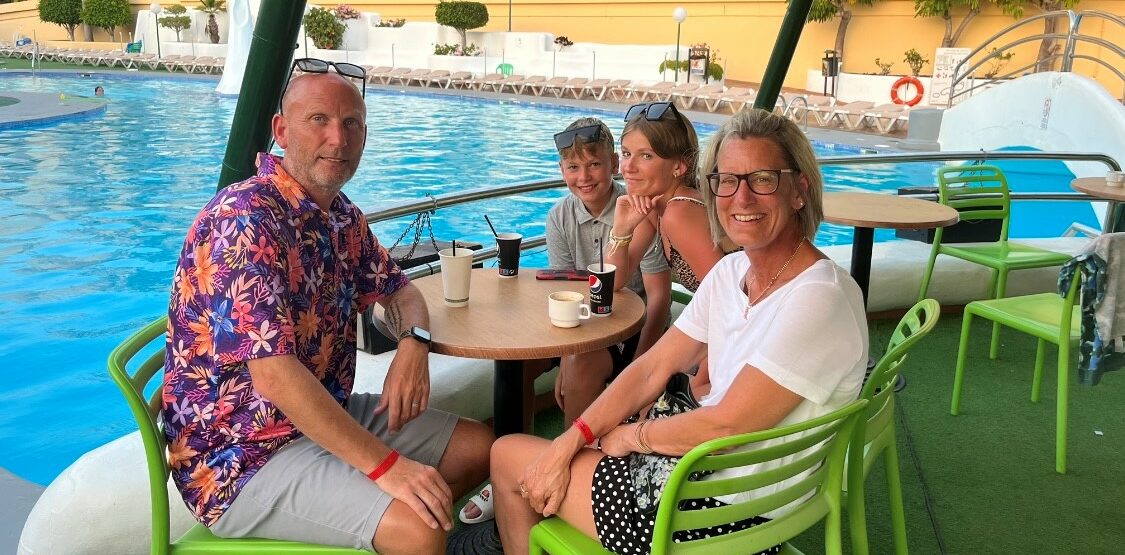
Daily migraines led to diagnosis
In 1995, Gavin, from Salisbury, then 21, was playing football with friends when an excruciating headache and vision problems caused him to tell his teammates that he couldn’t stay on the pitch a minute longer. Gavin said: “I could either see three of the ball, or not see the ball at all.”
By this point, Gavin, a carpenter, had been suffering with daily migraines for two and a half years. He had even been rushed to Salisbury District Hospital on one occasion, with suspected meningitis, and visits to his GP had not revealed the cause. Instead, he was self-medicating to get rid of the pain, which meant routinely “overdosing on painkillers – sometimes I was on more than 30 a day.”
The football game was the final straw. After driving himself home, Gavin booked another GP appointment, which led to a CT scan. After soldiering on with his symptoms for so long, Gavin was shocked to hear the news that the scan had found a 2cm by 1.5cm lump – the size of a small egg.
“My first thought was, brilliant!” Gavin admits. “Now they’d found the cause, they could work out a way to get rid of the pain.”
Gavin was diagnosed with a pilocytic astrocytoma. Medics thought the tumour might have been present, slowly growing, since he was about five years old. He underwent a craniotomy and shunts were put in, but the tumour could not be fully removed due to its position.
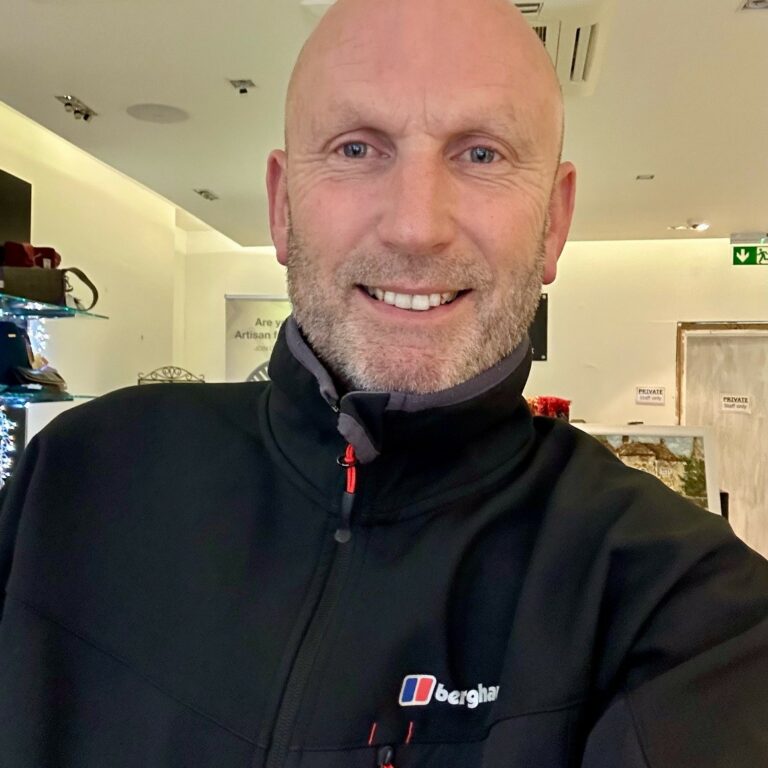
Looking back all those years ago, I didn’t know what was going to happen. I wasn’t sure I’d make it through the operation. I was leaving notes around for people. I was saying my goodbyes.
Gavin
Day to day, I can almost forget I have a brain tumour. But I can never forget losing my sight.”
Long road to recovery
Devastatingly, despite efforts made in surgery to avoid this, Gavin lost 75% of his sight as a result of the condition: “When the consultant came to see me after the operation, he was in tears,” Gavin says. “I’m so sorry, I can’t remove it,” is what he told me.
“It sounds odd, but immediately after the operation, I just got on with things. I knew my sight had been badly affected, but it took me a while to go and get it assessed, and find out just how badly. When I heard the words “75%” my heart just dropped. I do believe that if GPs had investigated more, I could possibly have saved more of my sight.
“I had to learn to walk again – my mobility was shot to pieces after the op – and with the loss of 75% vision it was soul destroying. I had zero confidence and was so fragile. I was a carpenter and joiner at the time of my operation, and I had to give that up.
“One of the hardest things is no longer being able to drive, it literally kills me and I’m reminded of it constantly – even more so once I had children. What’s also very hard is that there are no obvious physical signs of my sight loss. If you met me for the first time, you’d never notice anything was wrong. Yet the compensations I have to make – pavement watching, for example, to try and stop me tripping up; not being able to find my family if we get separated when we are out and about – are things I live with every day.”
Technology was very different
“Back when I was diagnosed, Salisbury didn’t have its own MRI scanner. It has three MRI scanners now. In those days, they did have CT scanners – that’s how they found out something was wrong.
“I used to have to travel from Salisbury to Southampton for scans. That has now changed – I can have my scans locally now. And another thing that has changed, there’s much more understanding now of what you go through during a scan, and more effort made to make you as comfortable as possible.”
It feels surreal to have lived with my brain tumour for so long.”
Gavin
“People often assume that if you have a brain tumour, it’s possible to have it removed. It’s a strange thought, to me as well, that I’ve still got it! But I know I’m one of the lucky ones. I get to tell my story.”
Gavin is now on his third consultant, two having retired during the three decades since his diagnosis. He doesn’t mind admitting that despite his trademark determination, in the early days, things looked bleak for a while. “I was very stubborn. I still thought I could do anything, even though the reality was my life was very different.
“But I’m extremely proud of who I am, what I’ve achieved, and what I’ve done since. I never wanted to stay in a job too long. In a strange way, I do think having the tumour gave me more tools than I already had to succeed. If at first I couldn’t do something, I had to work round it.”
Gavin, who now works as an academic coach in a Further Education college, has a tattoo that partly commemorates his brain tumour battle: “Always believe you can” – words that remain his motto today:
“It’s a symbol of belief and hope, and the dates are the dates of my operation, the day I met my wife, the day we got married, and the births of our two nutjob kids!”
Support was pretty much non-existent
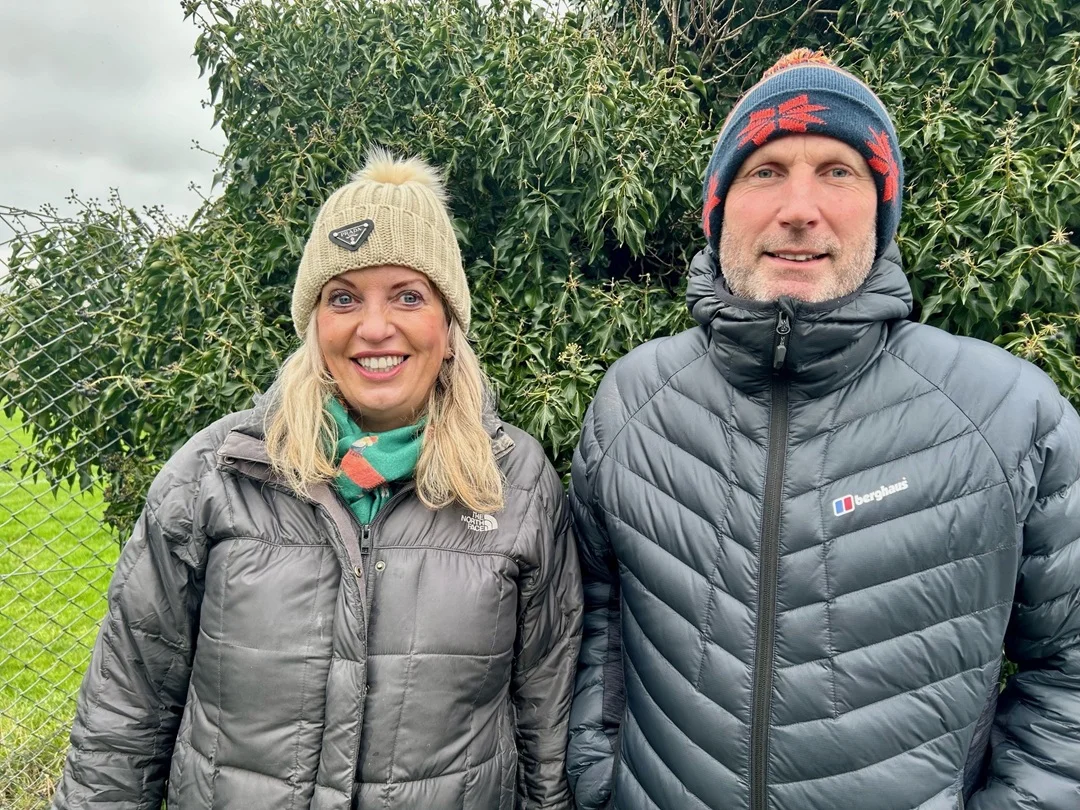
When I was diagnosed there really was nothing around. Social media was years away from being part of our lives.”
Gavin
Having faced his diagnosis when little support was available, Gavin does everything he can to increase understanding of brain tumours, offer hope to others, and fund research. “I’m always ready to tell my story, talk to groups, if asked,” he says, “to raise awareness, and hope, as well.”
Last year, alongside friend Louise Worthington and 49 others, he marked his 50th birthday by raising more than £52,000 – an incredible sum – by walking the 25km Thames Bridges Trek.
“Charities didn’t really exist back then,” he says. “When I left that hospital, I had no more than the basics, really. I had to fend for myself. I’d like to think things are better now, and that there is more information available for people today, although I think there is probably still some work to do.“
Gavin’s message to anyone newly diagnosed?
“You don’t have to be alone if you don’t want to be. There is support out there. It’s important that people know where to come and find it. That’s partly why I take every opportunity to share my story – to raise awareness and try and make things easier for people seeking information and help.”
Here to help
If you’re newly-diagnosed, or know someone who is, we’re here to help. The Brain Tumour Charity offers a wide range of inclusive support and accessible services for everyone affected by a brain tumour, whether it’s low or high grade, adult or child.