Targeting Treatment Resistance in Gliomas to Rapidly Push CAR-T Cell Therapies to Clinic
Fast facts
- Official title: Engineering cell state-guided CAR-T cell therapies for gliomas
- Lead researcher: Dr Christopher Mount
- Where: Massachusetts General Hospital
- When: February 2026 – January 2030
- Cost: £600,000 over 4 years
- Research type: Adult, high grade glioma
- Award type: Future Leaders Junior Fellowship
Doctors can tell the difference between types of brain tumours based on who they affect, where they are found and cells they are made up of. However, even a single brain tumour can contain a mixture of many different cells. This makes treatment challenging. One way to fight gliomas is to identify and target these distinct cells within a brain tumour.
What is it?
CAR-T cell therapy is a type of immunotherapy where immune cells, called T cells, are taken from a patient’s blood and modified in the lab. These changes make the T cells better at seeking out cancer cells. Therefore, when they are returned to the patient, they can find and kill cancer cells more effectively.
During Dr Christopher Mount’s Future Leaders Fellowship, he studied how tumours respond and become resistant to immunotherapies. He found that although tumours are unique to each patient, they often react in predictable ways when treated with a range of CAR-T cells. This discovery offered up new ways to target resistance to treatments.
Dr Mount will build on this work in his Junior Fellowship. He aims to turn these discoveries into new CAR-T cell treatments that work against gliomas by targeting those pathways of resistance. In addition to this, Dr Mount is hoping to further improve these treatments to make them safer and even more effective.
He is also using new sequencing technologies to test how effective other CAR-T cells are in glioblastoma tumour samples. These samples will be taken from patients enrolled in a CAR-T cell therapy trial at Massachusetts General Hospital.
Why is it important?
Immunotherapies, like CAR-T cell therapy, have proven to be effective in treating many cancers. However, most CAR-T cells can also only identify one target within a tumour. This restriction has meant that CAR-T cell therapy success has been limited in brain tumours, like gliomas, as they are made up of many different cells.
Dr Chris Mount’s discovery that glioblastoma cells respond predictably to a range of CAR-T cells offers unique targets for better treatments to combat resistance. This project combines new technology, promising targets and a dedicated team to rapidly move CAR-T cell therapies into the clinic.
This project has the potential to help people with gliomas, their families and healthcare professionals. Improved therapies for gliomas could lead to better patient outcomes and quality of life.
This will not only allow us to learn how to make better immunotherapies for these patients… but actually generate something that we may be able to translate in the clinic within the next handful of years, rather than handful of decades.
Dr Christopher Mount
Research is just one other way your regular gift can make a difference
Research is the only way we will discover kinder, more effective treatments and, ultimately, stamp out brain tumours – for good! However, brain tumours are complex and research in to them takes a great deal of time and money.
Across the UK, over 100,000 families are facing the overwhelming diagnosis of a brain tumour and it is only through the generosity of people like you that we continue to help them.
But, by setting up a regular gift – as little as £2 per month – you can ensure that families no longer face this destructive disease.
In this section
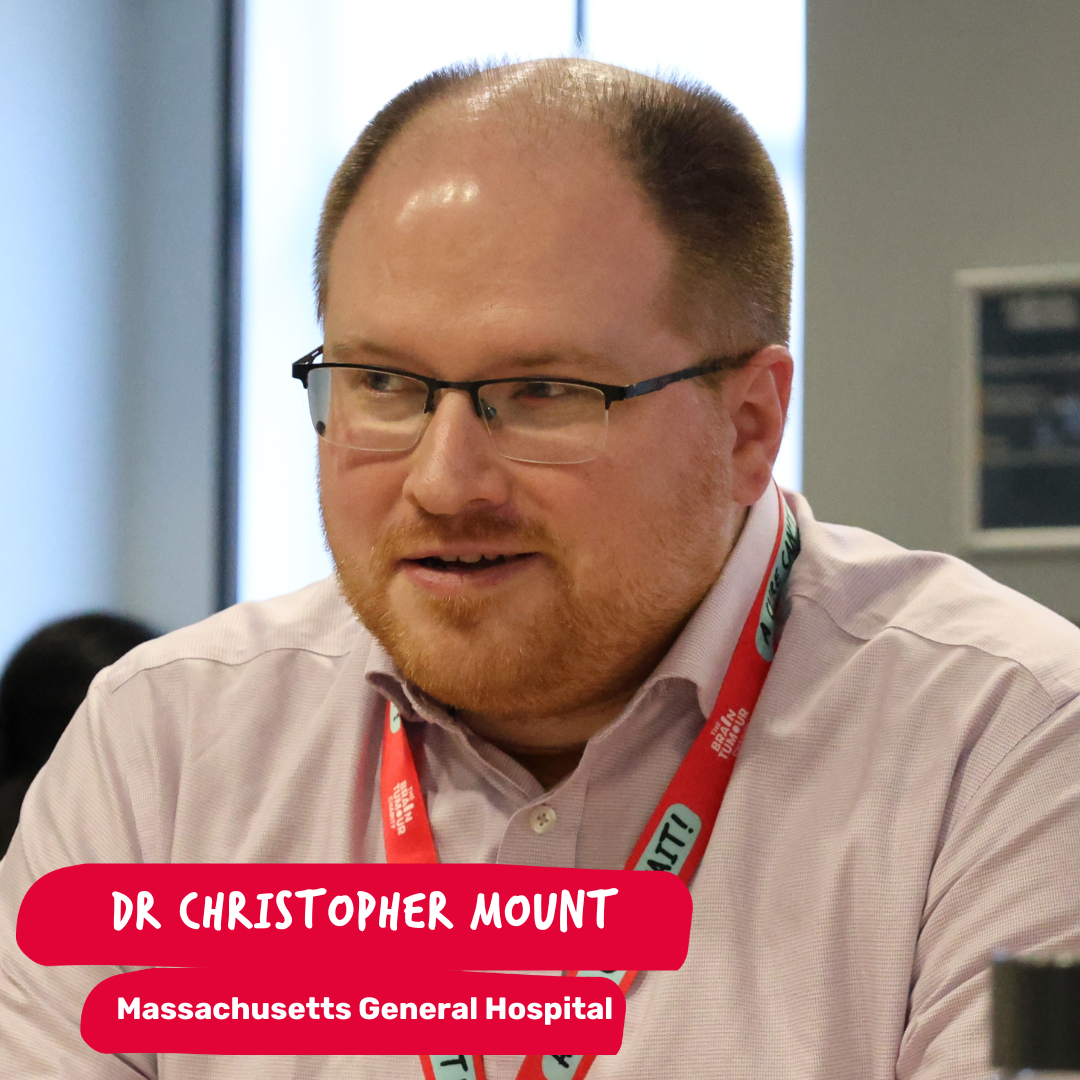
Dr Christopher Mount
Dr Christopher Mount is passionate about discovering new treatments for brain tumours. He studied at Stanford University and during his PhD he discovered a new target for immune therapy that could help fight an extremely aggressive type of brain tumour. He even led a clinical trial with children to test this therapy and saw promising results.
Now, Dr Mount is continuing his research in his new lab, at Massachusetts General Hospital. The Mount Laboratory, uses advanced single-cell technologies to explore how cell-based cancer treatments interact with brain tumour cells and their surroundings.