In 2024, we set up a Lay Advisory Board (LAB) to ensure the interests of the brain tumour community are at the heart of all our research funding decisions. It works closely alongside our scientific advisory boards to help us decide which proposals should receive funding.
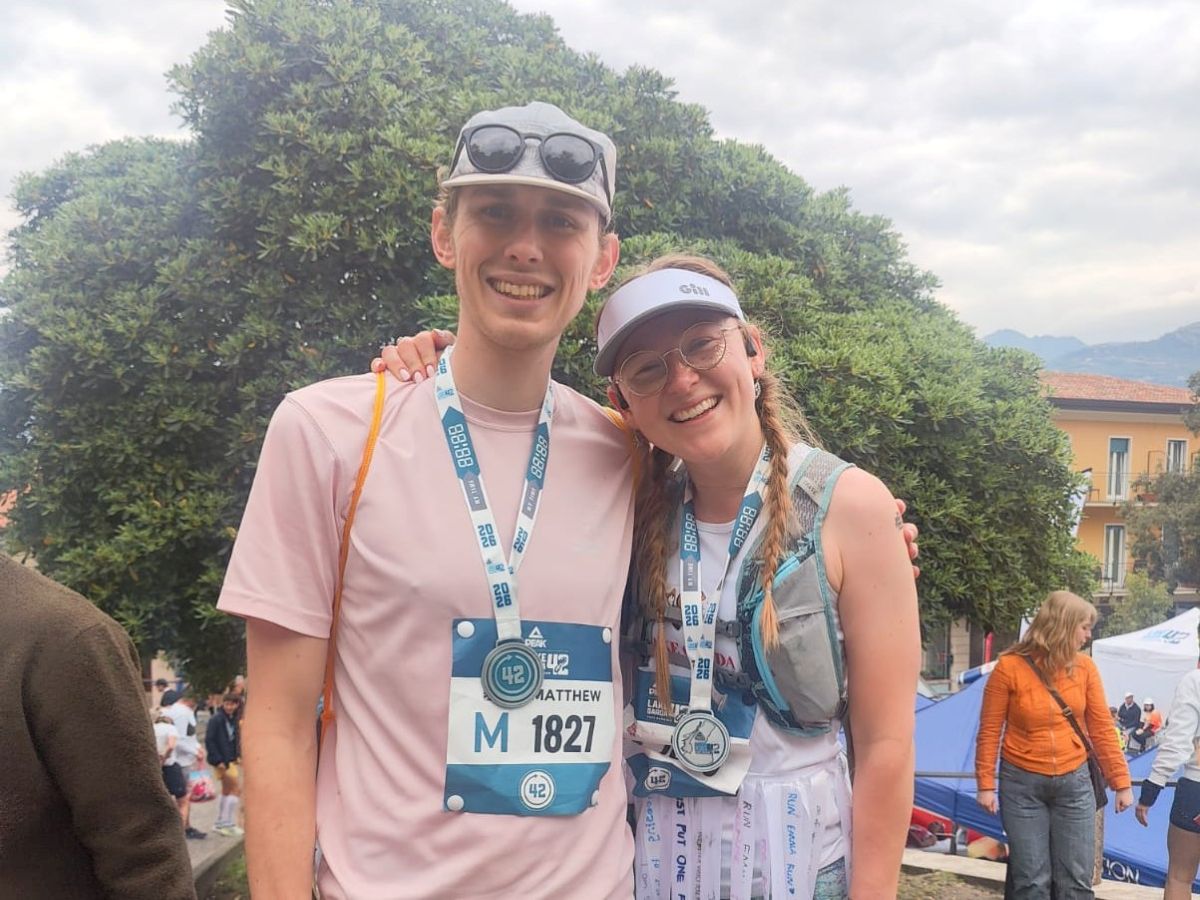
Our LAB has 10 members, including Emma Neason from Wiltshire. Emma became one of our Young Ambassadors in 2024 when her husband was diagnosed with a low grade glioma. They have both taken on various fundraising challenges in support of The Charity, including the Lake Garda Marathon (pictured above).
In this guest post, Emma focuses on why she joined the LAB, what the role involves, and what makes it incredibly rewarding.
“Patient and Public Involvement and Engagement (PPIE) is at the heart of how The Brain Tumour Charity works. The approach involves collaborating with people who have lived experience – either through their own diagnosis or that of a loved one – to help shape research and communications.

Emma
By including lived experience perspectives, The Charity ensures its work is relevant, accessible and truly reflective of the needs of the brain tumour community.”
This is where the LAB (and in fact many of The Charity’s volunteering roles) come in!
Get to know the LAB
The LAB is a group of volunteers from different backgrounds, who are all passionate about improving research into brain tumours.
Our group includes people living with a diagnosis, people supporting loved ones and people who have sadly experienced bereavement.
These diverse perspectives allow us to review research proposals and provide insights grounded in lived experience. I’ll cover this in a little more detail below.
Why I got involved in PPIE
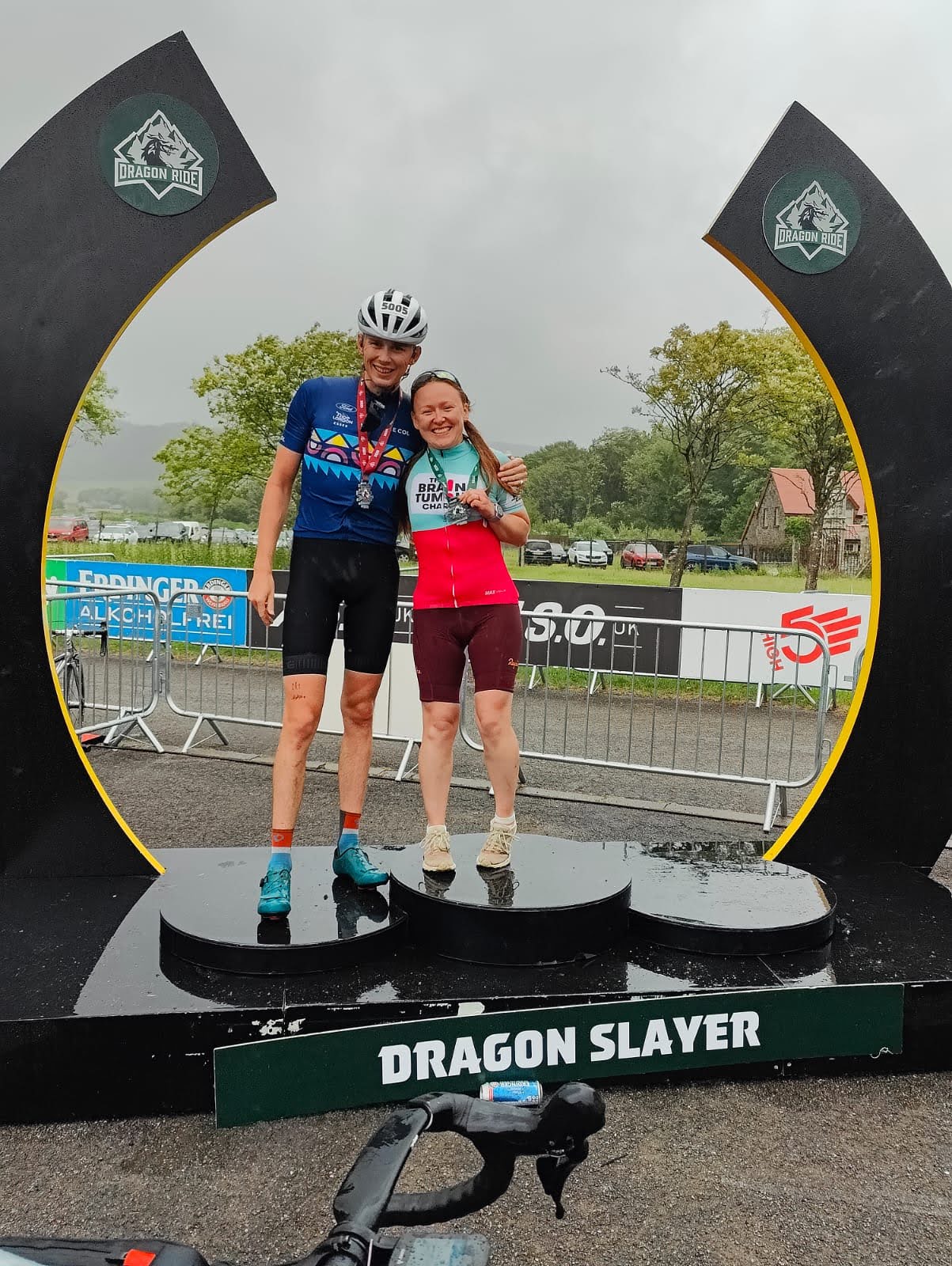
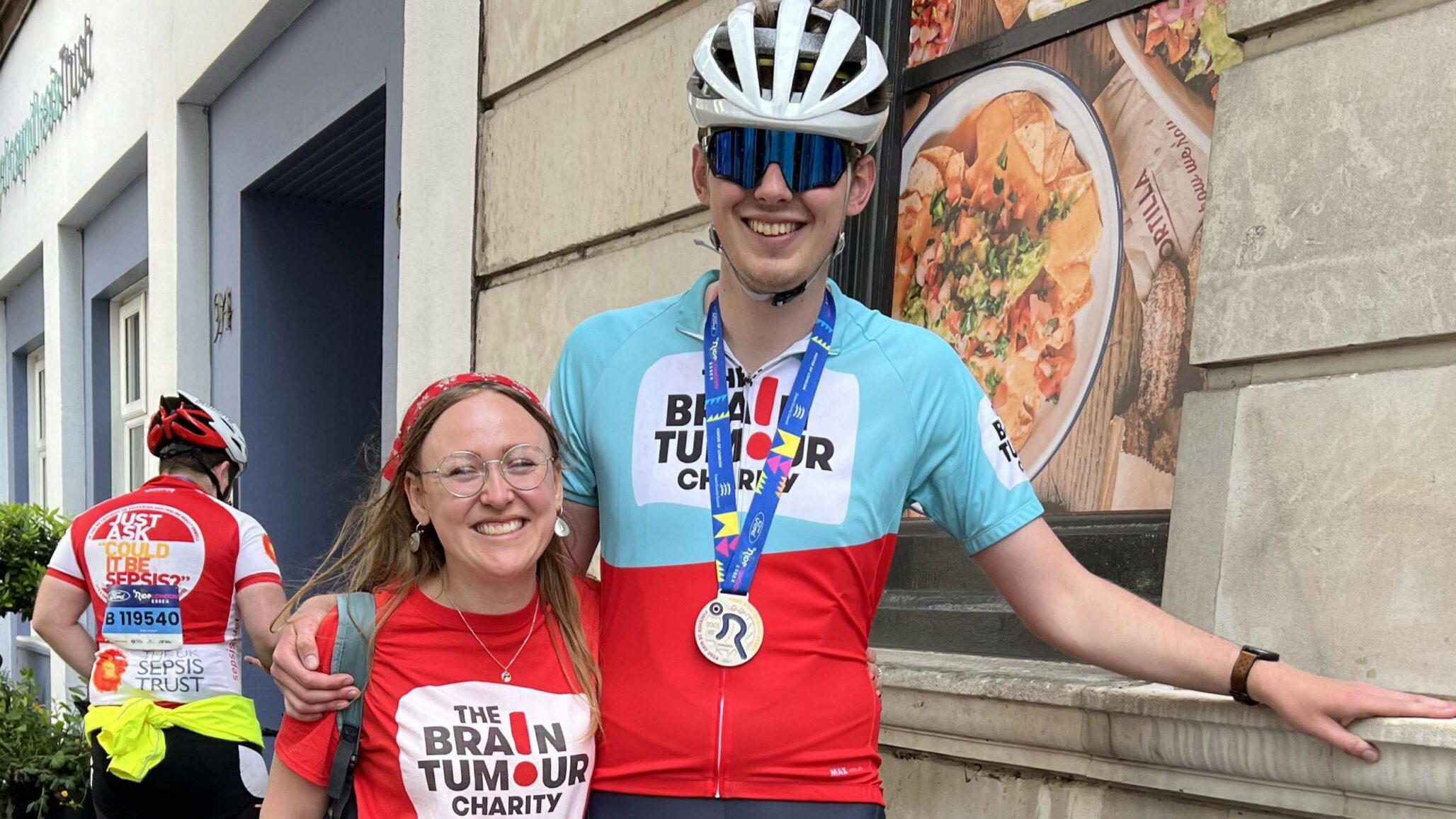
I started volunteering at The Charity in April 2024 as a Young Ambassador, following my husband Matt’s diagnosis with a low grade glioma.
My Young Ambassador role included things like reviewing research content, taking part in questionnaires, public speaking and campaigning to get our voices heard – all examples of PPIE. The 21 of us became instant friends, with a shared understanding of what it means to be affected by brain tumours at a young age.
Being part of such a passionate group gave me a real sense of purpose and motivation. I knew I wanted to do more, which led me to join the LAB.
While I have a scientific master’s degree, the most important part of the application process was direct experience of the impact of a brain tumour diagnosis and a genuine desire to contribute to change.
I am particularly keen to see high quality research into low grade gliomas funded. It is a common misconception that benign or low grade tumours are “fine”, which isn’t the case at all. In fact, these brain tumours often come with their own challenges, including side effects, ongoing treatment, regular scans and fears of recurrence.
What does the LAB do?
Many volunteering roles at the charity include reviewing lay (plain English) summaries of research. These are typically around one A4 page long and explain a project’s goals, methods and potential outcomes.
Volunteers provide feedback on whether these summaries are clear, accessible and relevant from a lived experience perspective.
The LAB carries out similar PPIE reviews for The Charity’s grant rounds, using structured frameworks. We help evaluate Quest for Cures, Expanding Theories and Future Leaders research proposals.
Alongside this, applications are reviewed by The Charity’s Biomedical Scientific Advisory Board (SAB), which consists of leading researchers and scientists in the brain tumour field. Find out more about the SAB
Providing a lived experience perspective
For each research funding application, two LAB members are assigned to review the lay summary. We consider questions such as:
- Is it free from jargon and easy for a lay audience to understand?
- Is the study relevant to patient and carer needs?
- If patients and carers are involved, is it accessible and not likely to take up too much of their time?
- Are graphs and charts helpful and easy to understand?
We then score each summary as high, medium or low. After this, we meet as a group to discuss our feedback and agree on scores. Feedback is shared with researchers, who get the chance to resubmit their work with any changes they’d like to make based on our input.
More often than not, our feedback is taken on board. This makes the role incredibly rewarding, as we can see the direct impact of lived experience shaping research.
Emma
Scientific Advisory Board meetings
The Biomedical SAB meets twice a year – once online and once in person – to discuss which projects should receive funding. They last met in London in March. I was really pleased to have the opportunity to join this meeting and present PPIE feedback from the LAB.
During the meeting, SAB members discussed all the applications and scored them on a scale from 1 to 10. Following this, scores were averaged and further discussion took place, including:
- Are the highest- and lowest-scoring applications aligned with expectations?
- Which proposals are the strongest overall?
- How promising is the research?
After this, the SAB made their recommendations on which projects should receive funding, i.e., the strongest applications. The Charity’s Research Committee (a subset of Trustees) are then responsible for making the final decisions about which projects to fund.
What’s interesting (and important) is that the charity does not have to allocate all available funding in any particular round. This may be the case if the proposals they have received don’t meet the required standard. From a fundraising perspective, I found this really reassuring, knowing that all donations are going to world-class research!
“Real momentum”
With the recent approval of vorasidenib for NHS use in England and Scotland, and the passing of the Rare Cancers Act, there is real momentum in the field. I’m hopeful that researchers will have even more progress to share soon!
I hope this has given you a glimpse into just one part of how The Brain Tumour Charity funds cutting-edge research into brain tumours – and the vital role that PPIE plays in that process.”
Get involved in PPIE
We are grateful to all our lay advisors, including Emma, for their valuable time and contributions. Over the past 10 years, they’ve helped us commit a huge £60m to the most promising research globally into primary brain tumours.
“Including lived experience in research decision-making strengthens every investment we make. Our lay advisors help us focus funding on research that has the greatest potential to make a real difference to patients and families, now and in the future.”
Rachel Roberts, Involvement Manager at The Brain Tumour Charity
If you’d like to help shape the future of The Charity, including the research we fund, we encourage you to consider joining our Involvement Network. Find out more here