Today, the National Institute for Health and Care Excellence (NICE) has published its Final Draft Guidance approving vorasidenib for prescription on the NHS. For the 300 people in England alone who may be eligible for this treatment – and hundreds more families in the future – this is extremely welcome news.
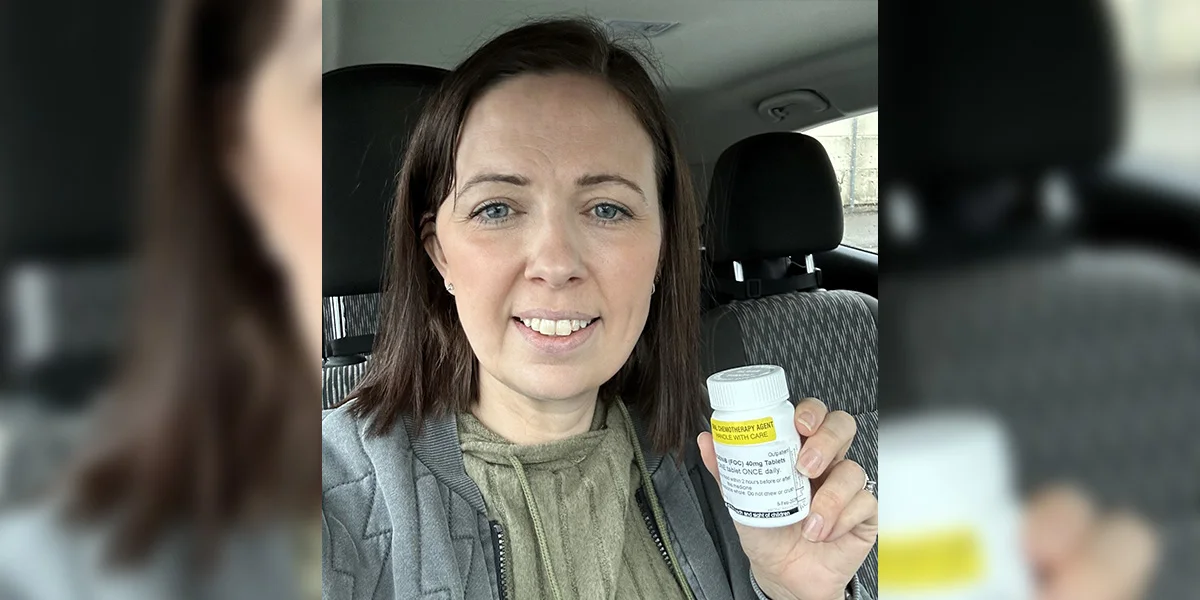
The oral treatment, known by its brand name Voranigo, can now be used to treat people aged 12 or older with IDH-mutated, low grade gliomas such as astrocytoma and oligodendroglioma. What’s more, the treatment is being made available under the Cancer Drugs Fund. This should mean speedier access for eligible patients while routine NHS funding is put in place.
This is only the second new NHS-approved drug to treat brain tumours since temozolomide chemotherapy was approved in 2006. It follows the Scottish Medicine’s Consortium’s decision to approve the treatment for use in Scotland last month.
The INDIGO clinical trial showed that vorasidenib slowed tumour growth and significantly delayed the need for chemotherapy or radiotherapy – helping people maintain a better quality of life for longer.
We’re delighted that vorasidenib has been approved by NICE. This is the second new brain tumour specific treatment to be approved for NHS use in the last three years. It’s clear that there is momentum in the space, and long held attitudes that nothing works when it comes to finding new treatments are becoming a thing of the past, giving people much-needed real hope.
Dr Michele Afif, CEO, The Brain Tumour Charity
Sally’s story – “it’s given me my life back”
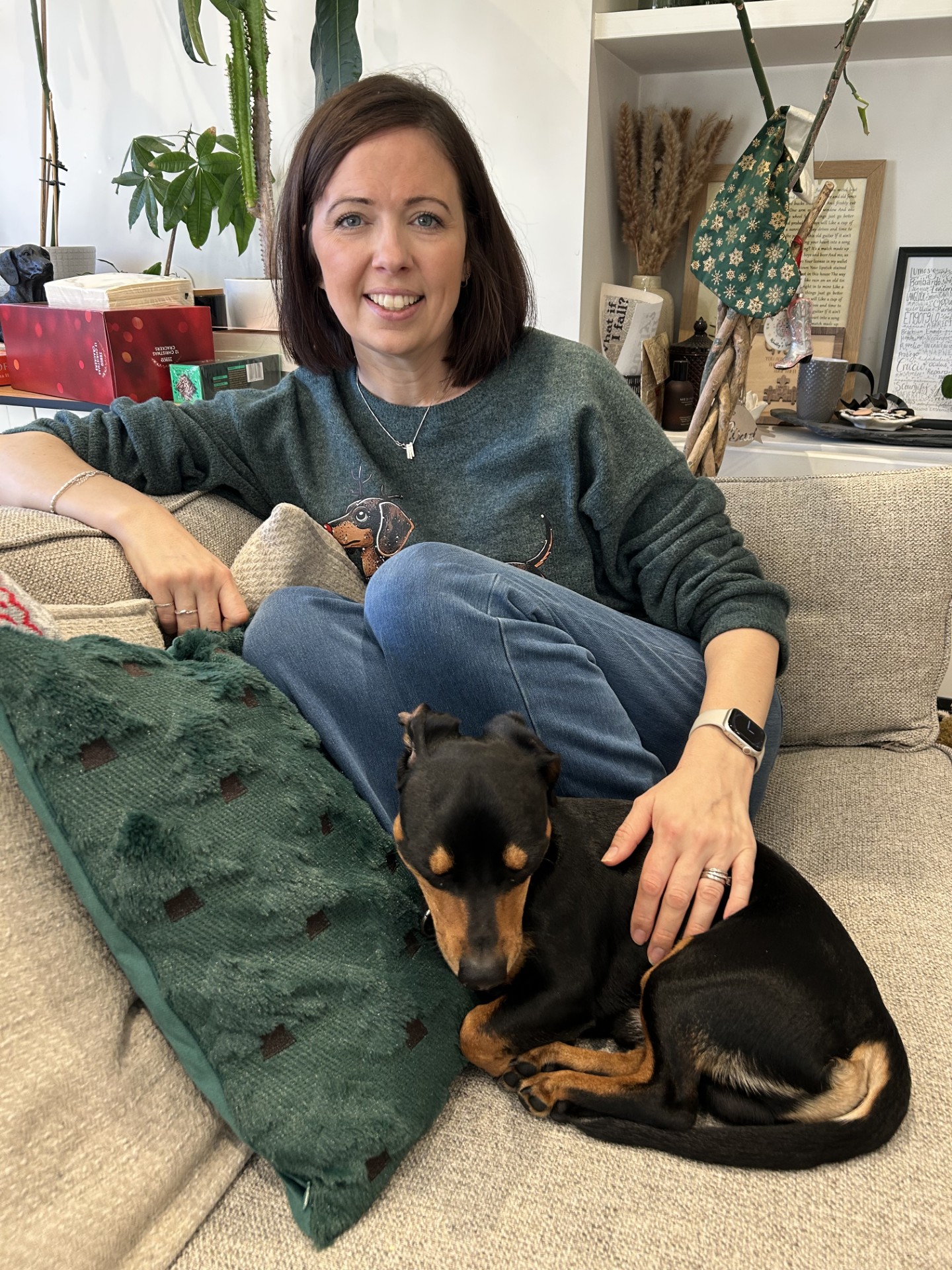
Sally Penny, 43, has been taking vorasidenib for almost a year and says it has “given me my life back.” She feels grateful every morning when her alarm goes off, reminding her to take her tablets. She’s had four MRI scans showing her tumour remains stable, she returned to work last June and says she can now spend precious time with her family and friends.
Sally said: “After months of worry since my initial diagnosis following a seizure that came completely out of the blue, and all the fear and uncertainty that came with a 10-hour brain surgery, vorasidenib became a shining beacon of hope.
“Since then, taking the medication has been simple. I’ve experienced no side effects and have felt completely well. The relief of having access to this medication cannot be overstated. Living under ‘active surveillance’ is incredibly anxiety-inducing.Vorasidenib may only work for me for a few years, but those years will be ones where I am living: working, raising my children to become wonderful adults, and enjoying life as a wife and daughter.
I feel grateful that despite the terrible luck of developing a brain tumour, it happened to be one that could be treated with this incredible medication.”
Laura’s story – there’s now hope
Laura Margott, from Limcolnshire, was diagnosed with a grade 2 astrocytoma in July 2023 after experiencing seizures at home the previous month.
Laura said: “I was taken to A&E in an ambulance with my husband not knowing if he had lost me that day. I nearly bit my tongue off during the seizures and was too weak to walk, shower or eat properly for weeks afterwards.
An MRI scan of my head revealed a mass on my brain and I had a craniotomy to resect the tumour at Addenbrooke’s Hospital. Recovering from the surgery was the hardest thing physically I have gone through in my life.
The impact of my diagnosis and prognosis (i.e. the fact there is no cure for my condition) has been even harder to try and come to terms with and impacts my mental health every day. I am terrified for my children that they may have to grow up without their mum as I want them to have the best life possible.
I am currently having MRI scans every six months to monitor re-growth of the tumour. I feel like a sitting duck. I am currently putting nothing into my body that can fight this disease when vorasidenib exists and can proactively fight the recurrence of my tumour.
Being able to take vorasidenib would obviously change that. It would be truly life-changing to my mental state. It would mean there would be hope in my life again for myself and my family and I could live in less fear every day.”
The campaign
Mary Burton and Dawn Emerton, trustees at Astro Brain Tumour Fund, began campaigning for the drug to be made available in March 2023, and Dawn’s son Shay gave evidence to the NICE Committee.
They said: “We are delighted with the announcement by NICE recommending vorasidenib for use in the NHS – this is a really important decision for the brain tumour community. It enables access to the first new therapy in many years, offering much needed hope of delaying disease progression for eligible grade 2 glioma patients and their families.
This decision demonstrates what can be achieved when patients, clinicians, charities and industry work together to drive change. We hope this marks the beginning of a new era of progress for everyone affected by brain tumours which is long overdue.”
Professor Susan Short, who is overseeing the clinical trial pilot ACT-BT, also welcomed the news adding:
This will bring equity of access to a kinder treatment for many patients with low grade glioma – reducing anxiety and improving quality of life for around 300 families in England alone. It’s an example of what we need to see more of in the brain tumour community – tailored therapies that shrink disease, enable people to go about their normal lives and reduce the immediate need for more invasive treatments.”
Susan Short, Professor of Clinical Oncology and Neuro-Oncology at the University of Leeds
We’d like to thank all those who shared their experience, as well as the researchers and healthcare professionals who responded to our survey to provide information that helped lead to this momentous decision.
Please see our FAQs below and contact our Support team if your query is not answered here.
Frequently asked questions
People in England aged 12 years and over who have low grade gliomas with an IDH-mutation who have had surgery but are not in need of immediate chemotherapy or radiotherapy.
The Scottish Medicines Consortium approved the treatment on 9 March 2025. Now that it’s been approved by NICE, vorasidenib will become available to eligible patients in England.
The All-Wales Medicine Strategy Group (AWMSG) makes some decisions for the NHS in Wales but generally follows NICE decisions.
NICE guidance is also generally accepted in the NHS in Northern Ireland once it has been checked by the Department of Health for any policy and financial consequences.
When certain low grade gliomas – including astrocytoma or oligodendroglioma – have an IDH-mutation, it causes an overproduction of a molecule that promotes tumour growth.
Vorasidenib, manufactured by Servier under the brand name Voranigo, has been developed by scientists to block the overproduction of this molecule. In clinical trials, the treatment was shown to significantly slow tumour growth and delay the need for chemotherapy or radiotherapy.
It is taken as a tablet at home, whereas chemotherapy and radiotherapy can often require hospital appointments. It’s a gentler, less invasive therapy, which means people can go about their normal life while taking the treatment.
We recommend speaking to your medical team to find out whether you’re eligible for this treatment. Clinicians will need to apply to the Cancer Drugs Fund on their patient’s behalf by filling out an online form. Once your specialist has submitted the form, they will be told whether or not you can start the treatment.
The INDIGO clinical trial referenced in this article has ended and the results are explained on our website here.
There is also a clinical trial exploring the safety of vorasidenib in combination with temozolomide, but recruitment has now closed.
In October 2025, the draft decision by NICE was NOT to recommend vorasidenib for use on the NHS. This triggered a consultation period, during which we asked for your views on the impact of this decision and of living with a diagnosis.
In just one week we received more than 1,300 responses to our survey, alongside emails and messages. These powerful testimonies highlighted the frustration felt by many, and we submitted this evidence to NICE to help ensure that lived experience was fully considered as part of the decision-making process. You can read some of those testimonies here.
This collective voice helped demonstrate the real-world impact of these tumours and the urgent need for progress. We are hugely grateful to everyone who shared their experience and helped make this decision possible.The Brain Tumour Charity has been involved throughout this process, submitting evidence from the brain tumour community for the NICE committee to consider.
This information was drawn from a survey and workshop involving people affected by the tumours that vorasidenib can treat. You can read some of that evidence here