In 2014, The Brain Tumour Charity funded a pioneering research project led by Professor Anthony Chalmers at the University of Glasgow. It studied glioblastoma, which is the most aggressive form of brain cancer in adults.
Tackling glioblastoma invasion
One of the biggest challenges in treating glioblastoma is its ability to invade surrounding healthy brain tissue. This invasive behaviour makes tumours very difficult to treat and can lead to loss of speech, memory problems and reduced mobility. At the time, researchers didn’t have the tools to properly study invasion or test drugs designed to stop it.
With £177,000 of funding, the team set out to tackle this head-on by developing more realistic laboratory models of invasive glioblastoma and pioneering new MRI techniques to detect tumour spread. Then they could use these tools to test the effects of drugs designed to block invasion into healthy brain tissue.
Collaboration across disciplines
But the impact of this project went far beyond the experiments themselves. The grant brought together scientists from very different backgrounds and helped launch two research careers that continue to improve understanding of brain tumours today.
Postdoctoral researchers Dr Joanna Birch and Dr Antoine Vallatos brought expertise in cancer invasion and physics from outside the brain tumour field. Anthony describes feeling “unbelievably lucky” to work with them and credits the project with encouraging collaboration across disciplines.
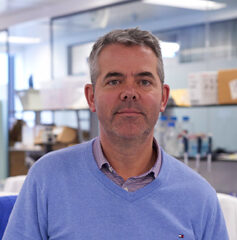
People forget how tiny our community was so many years ago – there were so few people working on brain tumours.
Professor Anthony Chalmers
Attracting and retaining talent
For Antoine, our funding underpinned an entire career in brain tumour and cancer imaging. In the early stages of the project, he focused primarily on the MRI physics, drawing on his background. Over time, he realised how important it was to also understand the underlying tumour biology. Antoine credits Anthony with always reminding him to “think of the patient, not just the biology,” and with giving him the space and patience to learn a completely new field.
This experience ultimately shaped his move towards the clinical side of research. He is now a lecturer in translational imaging biomarkers and MRI physics, continuing to apply and expand the approaches developed in this project.
Building on this work, Jo and Anthony were able to secure follow-on funding from the Medical Research Council. For Jo, this provided the foundation for her transition to research independence. She was awarded a £1.2 million UKRI Future Leaders Fellowship, later renewed for a further £700,000. The research also resulted in several important publications, helping to cement Jo’s career as a researcher in the brain tumour field.
Lasting impact
Importantly, this research helped create new lab models that accurately reflect how glioblastoma cells invade healthy brain tissue. Previously, lab models didn’t represent human tumours well, making it hard to predict whether drugs would work in people. Creating these models is essential for testing new treatments that could help treat people with glioblastoma more effectively.
Looking back, Anthony reflects that the biggest impact of the project was not just the improved understanding of glioblastoma invasion, but also the people. “The biggest impact, in my opinion, is two people who weren’t previously working in glioblastoma who now are,” he says. “It’s like having a big family in a way.”

At a time when the research community was small and funding scarce, this project helped attract new, talented researchers. Those researchers have since gone on to lead their own projects, bringing new people into the field and creating a ripple effect that has helped grow the brain cancer research community.
This has contributed to the vibrant brain cancer research environment now thriving in Glasgow and across Scotland.
Investing in people
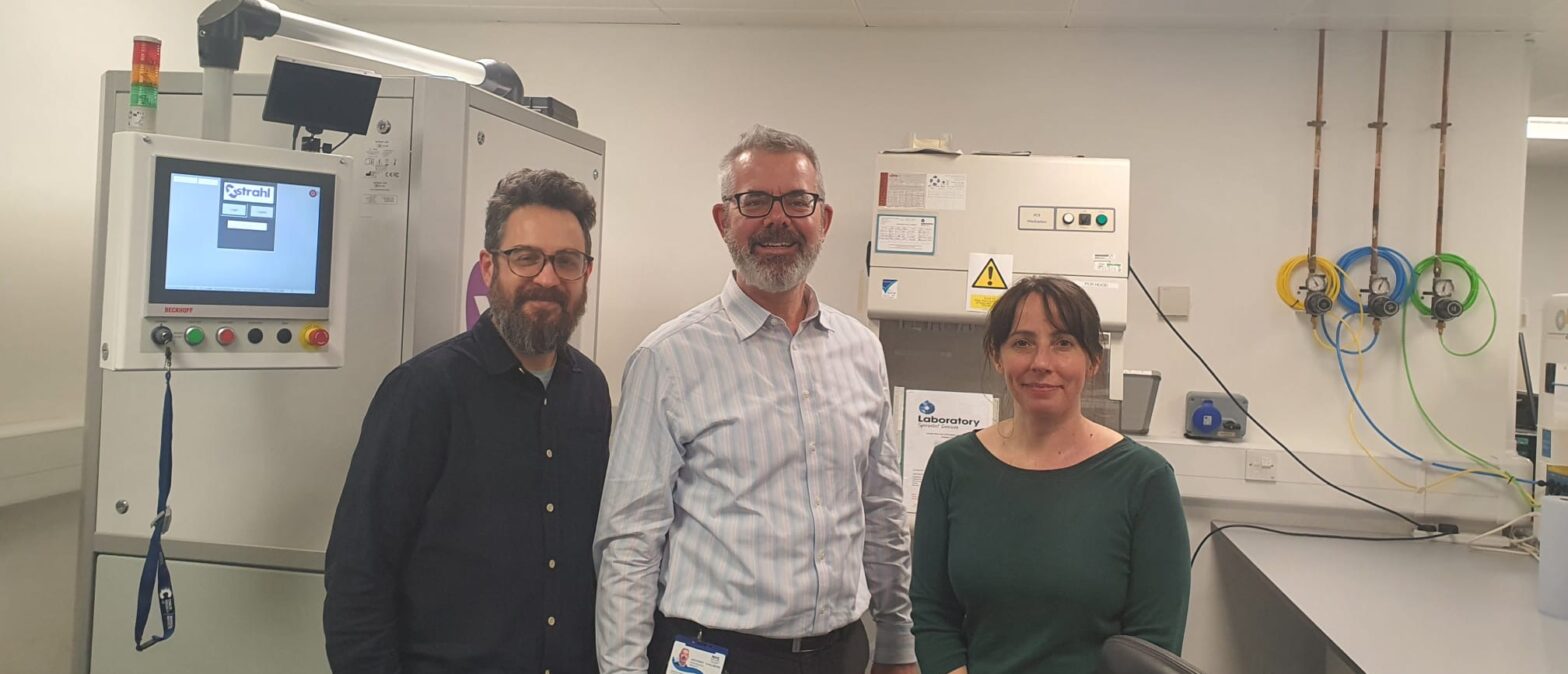
Today, Anthony, Jo and Antoine still work together, continuing to explore what happens at the tumour margin. Their collaboration is rooted in this early investment by The Brain Tumour Charity, which helped attract and retain talented researchers in a small but growing field.
This project is a clear example of how funding bold, collaborative science not only advances knowledge but also builds a network of skilled scientists. Together, they will continue driving progress for people with brain tumours for years to come.