
The International Day of Women and Girls in Science is a day to celebrate the vital achievements and contributions of women in science and technology. To mark the occasion, we’re proud to spotlight Dr Verónica Rendo, who we awarded £180,000 through our Future Leaders Fellowship scheme.
Launched in 2017, the scheme was created to identify and support emerging researchers in neuro-oncology, providing long-term funding and helping to build a connected, collaborative research community. Verónica was one of our first Future Leaders Fellows. The programme has now grown to include 13 of the brightest minds in the field.
Six years on, Verónica leads her own laboratory as a Group Leader at Uppsala University in Sweden. But her journey into science began in Venezuela, where she studied Biology at university. It was here that she became driven by curiosity and a desire to understand how cancer cells become different to healthy cells.
Take a chance on me
Reflecting on an exchange programme she took part in during her master’s degree, Verónica recalls the moment she first saw Sweden as an option. She said: “I was thinking, where is that on the map? The only thing I knew about Sweden was that they had ABBA and the Northern Lights!”
What began as a leap into the unknown soon became transformative. “Moving there completely opened my world view,” she says, “and I fell in love with the vibrant research environment in Sweden.”
Taking that chance ultimately led Verónica to stay on at Uppsala University to complete her PhD, studying colorectal cancer biology in the same department that had first welcomed her years earlier.
A turning point
Verónica’s path shifted when she attended a tumour metabolism conference and discovered parallels between her work on colorectal cancer and glioblastoma, the most aggressive form of brain cancer in adults.
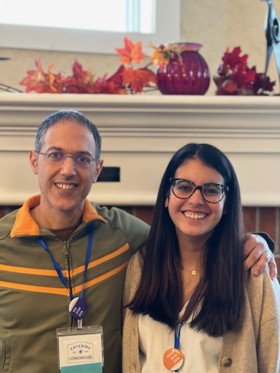
This led her to Boston, where she spent four years at Dana-Farber Cancer Institute at Harvard. She began working with Dr Rameen Beroukhim (pictured left). It was here that she began working on p53, a gene that plays a crucial role in preventing cancer growth and is frequently disrupted in cancer cells.
Funded by The Brain Tumour Charity, Verónica researched a class of drugs known as MDM2 inhibitors, which can reactivate p53 in glioblastoma tumours. These drugs were shown to work at first, but the tumours eventually grew back. Studying why this regrowth happened revealed that tumour cells could reprogramme their gene activity to survive.
In 2023, Verónica returned to Sweden to establish her own lab. Today, her team studies brain tumours in both adults and children, exploring drug combinations to improve the effectiveness of MDM2 inhibitors and understand how resistance develops over time. They are working towards treatments that are not only more effective, but also kinder and less toxic.
Networking and collaboration
Verónica stresses that networking and collaboration have been essential for her career growth. For both personal motivation and for enabling the research itself. “It really does take a village,” she says, “especially in neuro-oncology research, where there are big challenges that we need to overcome.”
She also praises the mentorship she received earlier in her career. In particular, from Dr Rameen Beroukhim and Dr Mimi Bandopadhayay at Dana-Farber Cancer Institute.
That sentiment has continued through The Brain Tumour Charity’s Future Leaders network.
Now spanning three cohorts, the programme connects researchers at different stages of their careers, creating space for mentorship, peer support and collaboration.
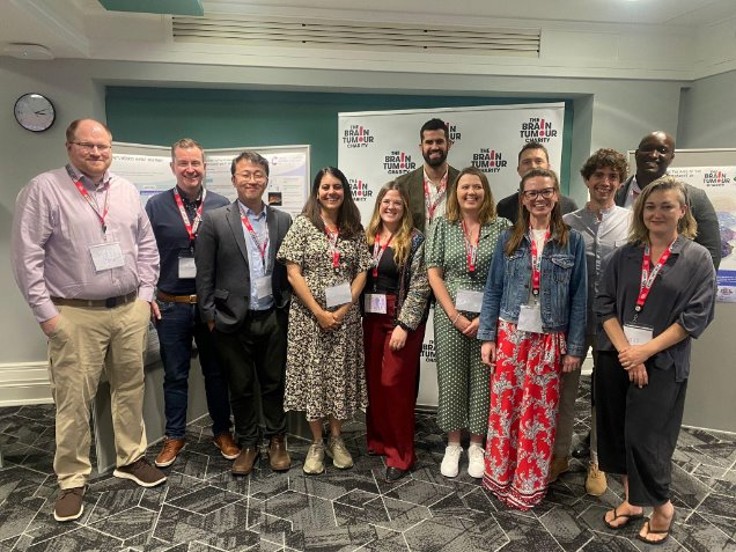
Fellows share advice on experiments, attend conferences together and visit each other’s labs. Recently, they had the opportunity to catch-up at our Shaping Tomorrow: Future Leaders in Focus conference (pictured left).
For Verónica, this growing network is invaluable. She says: “I truly believe this is my network of the future.”
Women in science
Verónica highlights the importance of representation for women in science. While many women enter research, female representation still decreases at more senior levels.
Working in Sweden, Verónica has seen how supportive policies, such as around maternity leave, can help close the gender gap. Just as important, she says, is learning from women who have successfully navigated these challenges. These collaborations have been both meaningful and motivating.
Verónica is now committed to paying that forward by actively integrating the next generation of scientists in her lab into supportive networks of women who can share experiences and navigate challenges together.
Hope for the future
Asked what gives her hope, Verónica points to the research community. Researchers, she says, are deeply passionate to help people affected by this disease, and that passion is contagious.
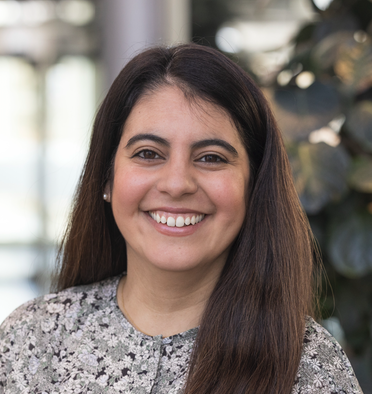
We are a driven community working towards a common goal – and we are progressing.
Dr Verónica Rendo
It is this strong sense of shared purpose, and the focus on the human impact of the work, that continues to drive her forward.