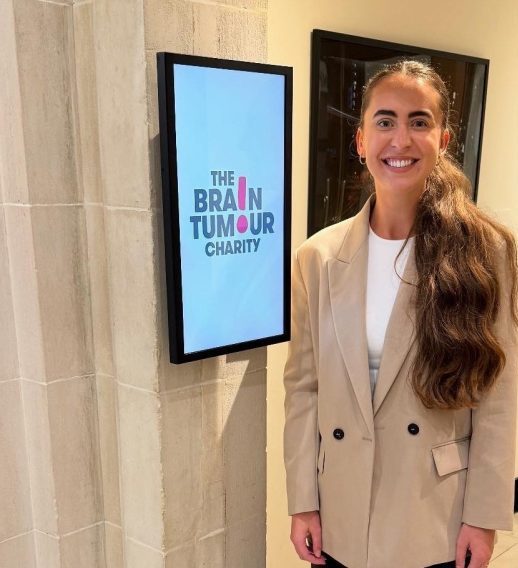
I’m Hannah Lemanski and I’m a brain tumour patient. I was lucky enough to work with The Brain Tumour Charity as a patient voice throughout the phases of researching and publishing their report ‘Unlocking innovation for brain tumours in the UK’. These are my reflections on that experience.
My story
In early 2023, I was diagnosed with a central neurocytoma – a rare intercranial brain tumour. I had surgery in May that year which successfully removed around 80% of the tumour.
But a routine scan in March 2025 showed signs of regrowth in the residual tumour. My consultant advised that the next appropriate step would be stereotactic surgery – also known as gamma knife radiotherapy. This is a form of radiation which delivers a highly targeted, high dose of radiation to the tumour, with minimal exposure of radiation to the surrounding tissue.
My scans were sent to the National Centre for Stereotactic Surgery in the UK, which confirmed that my tumour would be suitable for treatment. But they said they do not have funding from NHS England to deliver this treatment to people with my specific tumour type so I wasn’t eligible for this specialised treatment.
The alternative option was standard fractionated radiotherapy. While this can be effective, it comes with an increased risk of physical and psychological side effects. For a small, localised tumour like mine, this did not feel like a viable option. It felt outdated, too risky and it wasn’t the first line treatment my medical team recommended.
Privately funding the treatment I needed
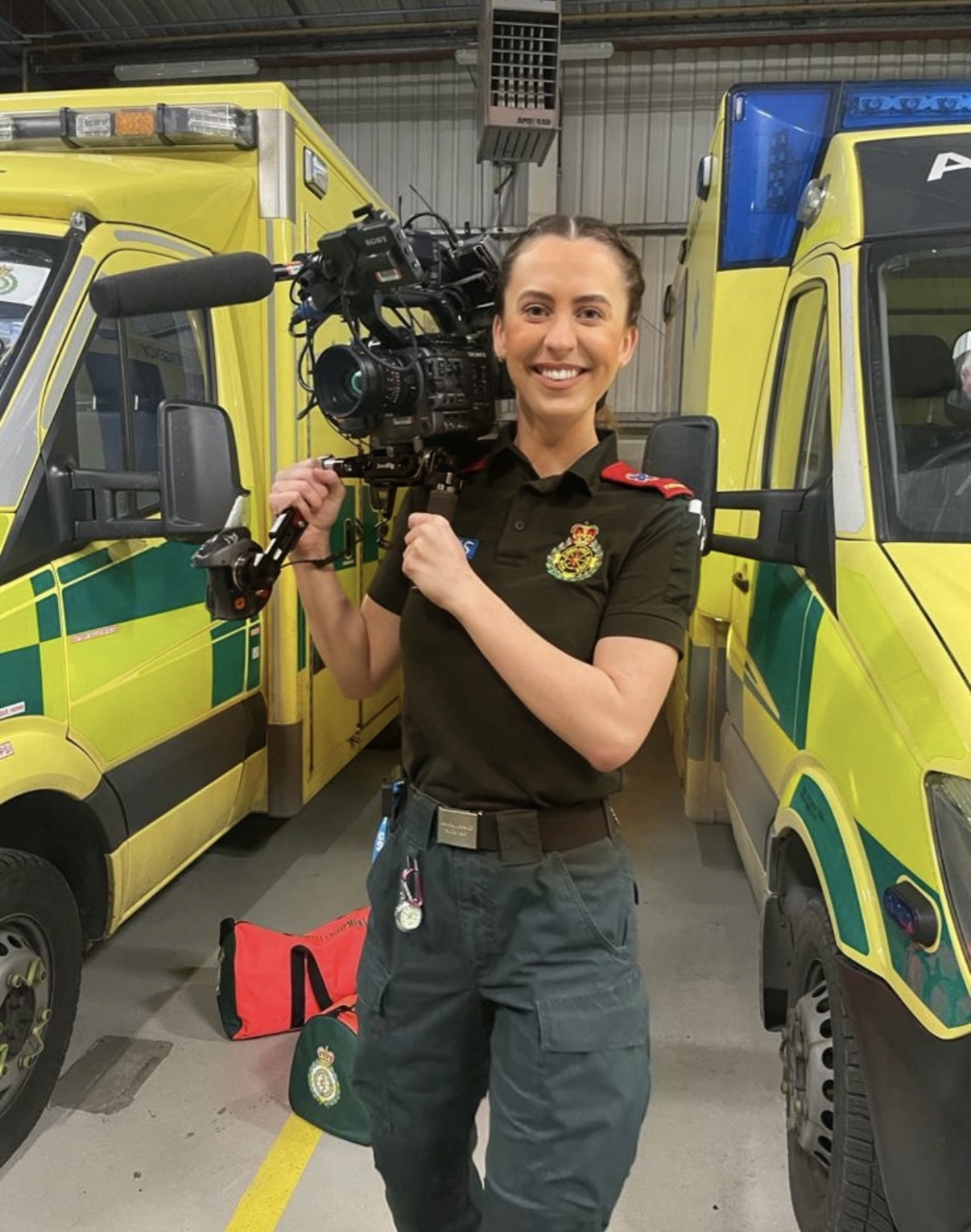
I started questioning why others, whose tumour was in a different part of their brain, could access this treatment but I couldn’t. In my opinion, when clinicians advocate for treatment based upon medical need, the system should support that judgment, not stand in the way.
My consultant submitted an individual funding request (IFR) to NHS England but it was rejected. So I felt I had no choice but to self-fund gamma knife treatment which cost tens of thousands of pounds.
Not only was it a financial burden, but the mental and emotional exhaustion I experienced felt unjust. I was fortunate to have supportive friends and family who fundraised for my treatment, for which I will be forever grateful for. However, we should not have to rely on the kindness of others to get the treatment we need.
I’ve since had an MRI scan which showed the gamma knife is working and the tumour is stabilising. I am lucky and have had minimal side effects from the treatment.
Why are decisions about treatment access based on rigid condition lists, rather than on individual patient factors such as age, comorbidities, and professional input from a multidisciplinary team? My case is clear evidence that the system is outdated and inefficient.
Hannah
The round table – a sense of urgency
My circumstances are why I was pleased to attend a parliamentary roundtable in Westminster organised by The Brain Tumour Charity in September 2025. It brought together pharma and medical technology companies to explore the challenges they face in developing and delivering cutting-edge brain tumour therapies within the NHS.
The discussion, chaired by Tamworth MP Sarah Edwards, included the Association of the British Pharmaceutical Industry (ABPI) and Association of British HealthTech Industries (ABHI) as well as my fellow Involvement Champion Owen Sutton.
There was a powerful sense of urgency to the discussion which concluded:
It’s vital that we not only identify the challenges in brain tumour care but also focus on how we can overcome them. Hearing directly from both patients and experts was invaluable in shaping that conversation.
Sarah Edwards, MP
It became very apparent that for us as patients, the challenges don’t end at a brain tumour diagnosis. For some, they continue into accessing further treatments, clinical trials and medications.
I left the roundtable feeling better informed and not alone in facing my own barrier to treatment. I also felt more motivated than ever to keep highlighting and campaigning for change for those of us living with this diagnosis.
Ultimately, there is a lot more that can be and should be done to improve care and outcomes for people living with brain tumours.
The panel event – March 2026
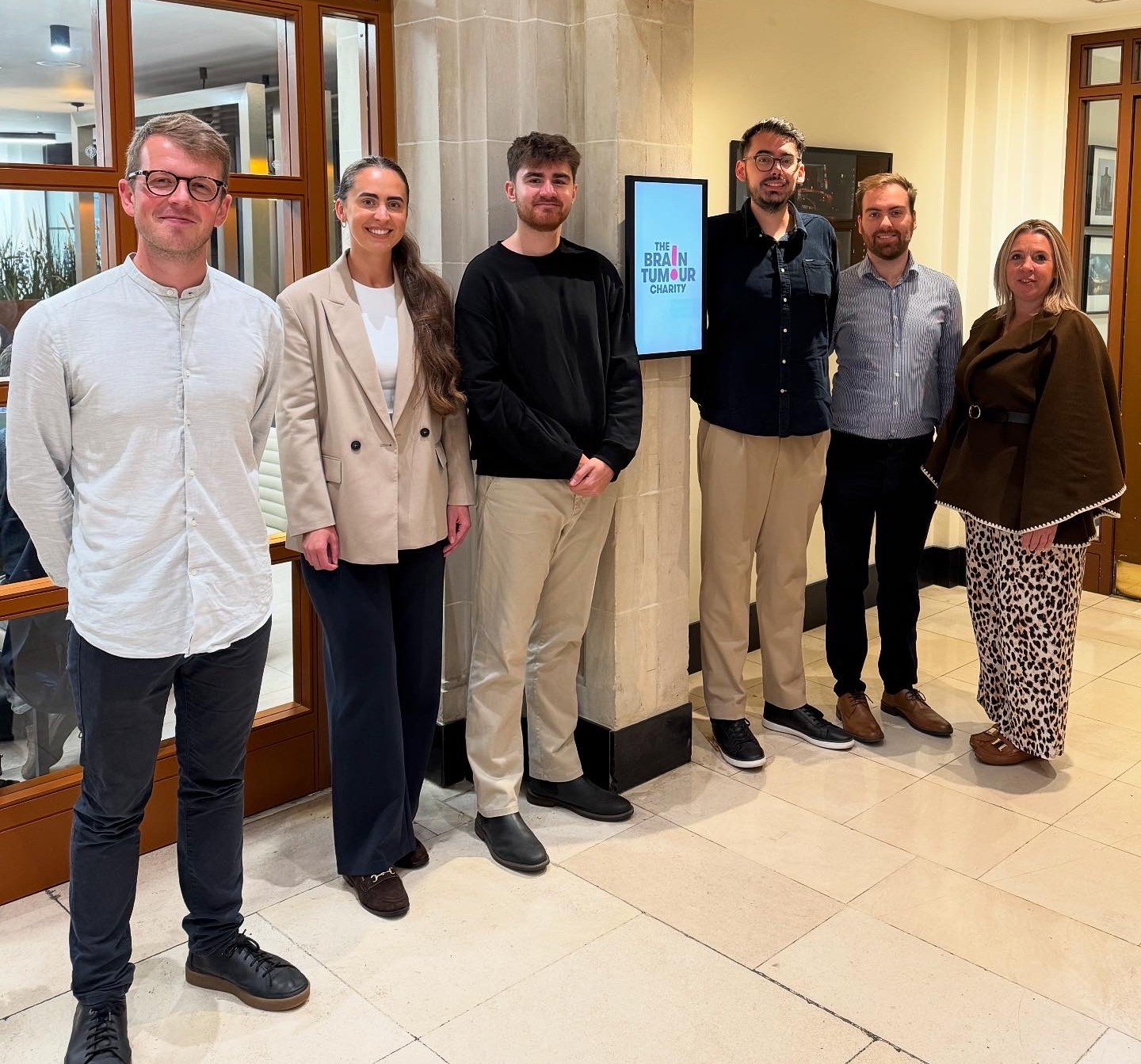
When the report was published, I attended the panel discussion chaired by Guy Opperman – a former Government minister who was himself diagnosed with a meningioma brain tumour in 2011.
Guy addressed questions to each member of the panel: The Charity’s Chief Executive Dr Michele Afif, Prof Mike Lewis professor of life science innovation at the University of Birmingham; George Freeman, MP (Conservative, Mid Norfolk) who worked in biomedical research for 16 years and Dr Amit Aggarwal, Executive Director, Medical Affairs and Strategic Partnerships at the Association of British Pharmaceutical Industries.
The discussion was both sobering and hopeful. One of the points that stuck with me was the gap between the scientific expertise we have in the UK and the struggle to ensure patients can access that.
Panellists highlighted the systematic failures which basically prove that in some cases it is not lack of innovation it is lack of implementation.
Dr Afif said she felt the system wasn’t set up to deal with rare disease, and Dr Aggarwal added: “We have an exceptional science base, exceptional academia and a unique asset in terms of NHS data. Where we struggle is in that translation into clinical benefit and it’s not because any one single part of the system is failing.
“Each part, whether it’s discovery or research regulation or the High Technology Assessment process or the NHS, is trying to do – to varying levels of success – what it’s designed to do. But, I think, collectively the system is not optimised to do that whole pathway from discovery all the way through to translation and patient benefits. So, we end up with a system that’s excellent at discovery and innovation but not consistent at delivering it.”
It’s frustrating to hear that the potential for much better care to improve morbidity and mortality rates is there but the system doesn’t support it. While this is no one’s direct fault and, it appears, everyone is trying to do the ‘right thing’, red tape and complexities get in the way.
A revolutionary idea
George Freeman MP said that about 40 decisions need to be approved along the supply chain to change a treatment pathway. He argued that the NHS had been set up as a provider funding system, not as a patient pathway provider.
On the positive side, Mr Freeman said that we need to empower patients to drive change and added: “I think we should democratise, digitalise and decentralise.”
I liked his idea for an ‘opt out’ system – similar to the organ donation one – to enrol on clinical trials. He suggested that everyone with a diagnosis could become part of a community through an app and, within it, they’d only have to slide a consent bar. By doing this they would agree to make their health data available and if a suitable clinical trial or research project emerged, they would automatically become a potential candidate for it.
As a patient I think this would be a revolutionary idea. Many people aren’t aware that clinical trials could be an option for them. Several panellists agreed that this could give patients the freedom to be involved with research and clinical trials, increasing participation.
The counter argument was that this could leave patients making the wrong choices. However, when faced with adversity and poor outcomes, many of us are willing to try anything that might do some good.
Of course, this has to be relative to the diagnosis but I think with the support of our consultants and multi-disciplinary teams, a system such as that could help. Especially as we know clinical studies for brain tumours have the lowest level of recruitment among all cancers.
The UK versus the rest of the world
The panel discussed how the UK compares to the rest of the world regarding brain tumour treatments and innovation, and said the UK seems to ‘make things harder than it needs to be’.
Delays in opening clinical trials, difficulties recruiting enough patients for trials and complex regulatory systems can discourage medical companies from investing here.
We learned that countries like the USA are much further ahead when it comes to funding and incentives. In the room it felt like we were all in agreement: the UK needs to make it easier to collaborate both internally and with other countries to improve care for patients.
Everyone agreed that brain tumour patients deserve more. We deserve timely diagnosis, better access to treatments and a healthcare system that works around the patient and their families – not layer upon layer of bureaucracy.
As a patient, it was inspiring to see the progressive conversations taking place at a policy level. While encouraging, the discussions highlight the real current issues we are all facing and it doesn’t feel good enough. I really do hope that these are the first steps and that action will be taken.
Thank you to Hannah for writing this article. If you’d like to find out more about our campaigning work, the support services we offer and the research we fund, you can sign up to our email newsletter here.