High grade brain tumours
Each year in the UK, approximately 5,000 people are diagnosed with high grade brain tumours.
On this page:
What is a high grade brain tumour?
Types of high grade brain tumour
How are high grade brain tumours treated?
Living with a high grade brain tumour
Primary brain tumours are tumours that grow from the cells of the brain itself. They are graded from 1 to 4, with grade 1 being the slowest growing and least aggressive, through to grade 4 being the most aggressive and fastest growing.
What is a high grade brain tumour?
High grade brain tumours are classified as grade three or four. They:
- Are fast growing
- Can be referred to as ‘malignant‘ or ‘cancerous’
- Can spread within the brain or the central nervous system
- Are incurable but can be treatable
- May come back, even if intensively treated
- Often require additional treatments, as surgery alone may not be sufficient to treat them.
Is it brain cancer?
Health professionals also refer to high grade brain tumours as grade three or four brain cancer.
Grade 1 and 2 primary brain tumours are considered slow growing and are usually non-cancerous. These tumours can change and become more aggressive over time. These can also be referred to as ‘low grade tumours’.
You may hear people refer to other types of cancer in stages, the stage of a cancer describes the extent of spread throughout the body. This term is not used for brain cancer as it very rarely spreads outside of the brain. Therefore, brain tumours are classified by a grading system, which reflects the rate of growth or how aggressive the tumour is.
Click here to find out more about brain cancer.
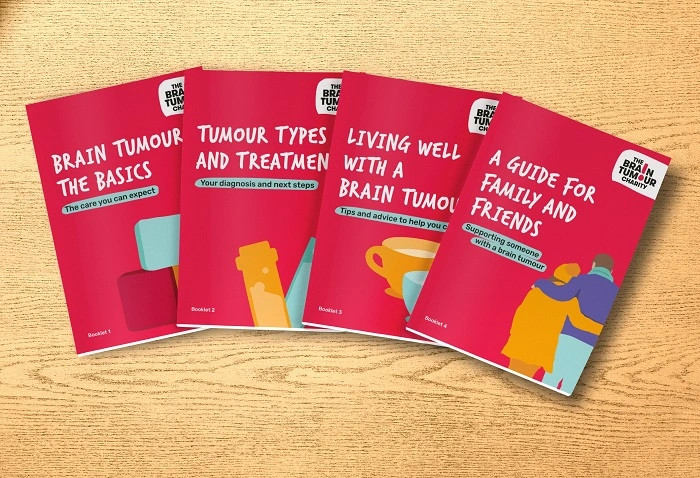
Get your free Information Pack
If you or someone you love has been diagnosed with a brain tumour and you don’t know which way to turn, start with our free Information Pack.
What are ‘mixed grade’ tumours?
Some tumours contain a mixture of cells with different grades. The grading of a tumour will reflect the most aggressive parts of the tumour. For example, if a brain tumour biopsy found some grade 3 and grade 4 features, a grade 4 diagnosis would be given.
Types of high grade brain tumour
There are over 130 types of brain tumour, as classified by the World Health Organisation accounting for both high grade (cancerous) and low grade (non-cancerous).
Here we list some of the more common high grade brain tumours for adults and children. (Please note that some of the tumours mentioned can also present as low-grade tumours. More information can be found on the low-grade page):
The most common type of primary brain cancer in adults is glioblastoma. This is sometimes referred to as a GBM. This is an aggressive, fast-growing tumour which originates in the cells of the brain. It is an incurable brain tumour with treatment options which focus on controlling the growth for as long as possible.
High grade astrocytoma and oligodendroglioma are aggressive, fast growing brain tumours. They can develop as a low grade tumour that changes to become high grade, or they may originate as a high grade tumour. It is an incurable brain tumour, however there are treatment options available to help control the growth for as long as possible.
Medulloblastoma is the most common high grade childhood tumour, accounting for 15-20% of all childhood brain tumours. They are commonly found in children between ages of three and eight, with a higher occurrence in males.
Diffuse Intrinsic Pontine Glioma or ‘DIPG’ has recently been renamed ‘Diffuse Midline Glioma’ and is the second most common type of primary, high grade brain tumour in children.
The majority of DIPGs are astrocytomas. Although the structure of DIPG cells resembles that of high grade astrocytomas originating in other parts of the brain, there are also a number of possible differences which researchers are currently trying to identify and explain.
How are high grade brain tumours treated?
Treatment decisions are most commonly discussed in a multidisciplinary team (MDT) meeting where various experts discuss individual patient cases and make treatment plans. This meeting is attended by specialist experts such as:
- Neurosurgeons
- Radiologists
- Oncologists
- Pathologists
- Clinical nurse specialists
Your specialist team will discuss the best treatment options for a high grade brain tumour with you. Your individualised treatment plan will be influenced by:
- Tumour size
- Tumour location
- Symptoms
- Your health
- Nature of tumour after assessment of MRI scans.
Standard treatments for high grade brain tumours include:
You may undergo surgery for a variety of reasons such as:
- Whole or partial removal of your tumour (craniotomy)
- Diagnosis of tumour type (biopsy)
- As part of chemotherapy treatment
- Or for reducing associated conditions, such as hydrocephalus, by putting in a shunt.
Whenever possible, your neurosurgeon will try to remove all of your tumour, or as much as is safe to.
It is important to know that neurosurgery is not always possible. If your brain tumour is too close to an important part of the brain, surgery may be too risky. In this case, health professionals may suggest another treatment option.
If your neurosurgeon feels that surgery to remove the tumour is an option, they will aim to remove as much as is safely possible. Some tumour cells might be left behind as they are not always visible under the microscope or on scans.
If removing the tumour is not a safe option, your neurosurgeon may discuss a biopsy with you. This aims to take a small piece of the tumour tissue out, to send to the lab and obtain a diagnosis, which can help tailor further treatment options.
Sometimes brain tumours can cause problems in the brain, such as a build up of fluid. This is called hydrocephalus and can cause symptoms such as headaches, nausea, vomiting and drowsiness. In some situations, this can be managed by inserting a shunt which helps to drain the fluid away. This procedure is not always suitable and therefore if it is appropriate your neurosurgeon will discuss it with you as an option.
Radiotherapy may be used on its own, or in conjunction with other treatment options, such as neurosurgery or chemotherapy.
It uses controlled doses of invisible, high energy beams of charged particles to destroy tumour cells whilst causing as little damage as possible to surrounding cells.
Radiotherapy can have side-effects. Your specialist oncology team will discuss these with you to help you make informed decision about your care.
Medical experts may use radiotherapy:
- where surgery isn’t possible
- after surgery to kill any remaining tumour cells
- to prevent a tumour from returning
- to slow down the growth of the tumour.
Chemotherapy is the use of drugs to destroy tumour cells by disturbing their growth. You may be given chemotherapy on its own, or it may be used with or after surgery or radiotherapy.
It is the use of cytotoxic (anti-cancer) drugs that affect the growth of tumour cells by interfering with the way they divide and create copies of themselves.
It also acts on all dividing cells, including healthy cells, but healthy cells are able to repair themselves better than tumour cells, so fewer of them die after treatment.
There are different types and options of chemotherapy. It can come in tablet or capsule form or it can be given as an injection into the vein.
Chemotherapy can have side-effects; your specialist oncology team will explain these in detail and discuss the options with you to support you to make informed decisions about your care.
Living with a high grade brain tumour
A brain tumour diagnosis is devastating. It can be very difficult to accept and can change your life in many ways. It can have a significant impact on your social, physical, functional and emotional well-being.
Brain tumours may cause symptoms that can have an impact on your quality of life. They can affect different parts of the brain which control different functions such as speech, vision, thinking and movement. This means that the effects of a brain tumour you may experience depends on the location, its size and how fast it is growing.
Your specialist healthcare team will monitor and support your symptoms. You can talk to them about any worries or concerns that you may have around how your diagnosis affects your day-to-day life.
Find out more information about the common side-effects of a brain tumour and discover some of the strategies our community has found useful to cope with them.
If you have a high grade brain tumour, it is likely that the law will consider you to have a disability, even though you may not see yourself that way.
Having a high grade brain tumour can have implications on your day-to-day life and leave you with questions such as:
- I’m struggling financially, do I qualify for any government benefits?
- Can I drive with a brain tumour?
- What about my job… can I still work?
- Can I get health insurance?
Accurate source of health information
We follow stringent steps to make sure that our information is accurate, reliable, and up to date. Find out more about how we create trustworthy health information.

- Verified by: J Sokratous – Neuro-Oncology Specialist Nurse
- Date checked: 12/04/25
- Next check: 12/04/28
Louis, D.N., Ohgaki, H., Wiestler, O.D. and Cavenee, W.K. (eds.), 2021. WHO Classification of Tumours: Central Nervous System Tumours. WHO Classification of Tumours, 5th ed., vol. 6. Lyon: International Agency for Research on Cancer (IARC).
Weller, M., van den Bent, M., Hopkins, K., Tonn, J.C., Stupp, R., Falini, A., Cohen-Jonathan-Moyal, E., Frappaz, D., Henriksson, R., Balana, C., Chinot, O.L. and Reifenberger, G., 2015. Diffuse gliomas in adults. Nature Reviews Disease Primers, 1, p.15017. https://doi.org/10.1038/nrdp.2015.17
Support and Information Services
Research & Clinical Trials Information
You can also join our active online community.
In this section

Get support
If you need someone to talk to or advice on where to get help, our Support and Information team is available by phone, email or live-chat.
Recommended reading
Share your experiences and help create change
By taking part in our Improving Brain Tumour Care surveys and sharing your experiences, you can help us improve treatment and care for everyone affected by a brain tumour.
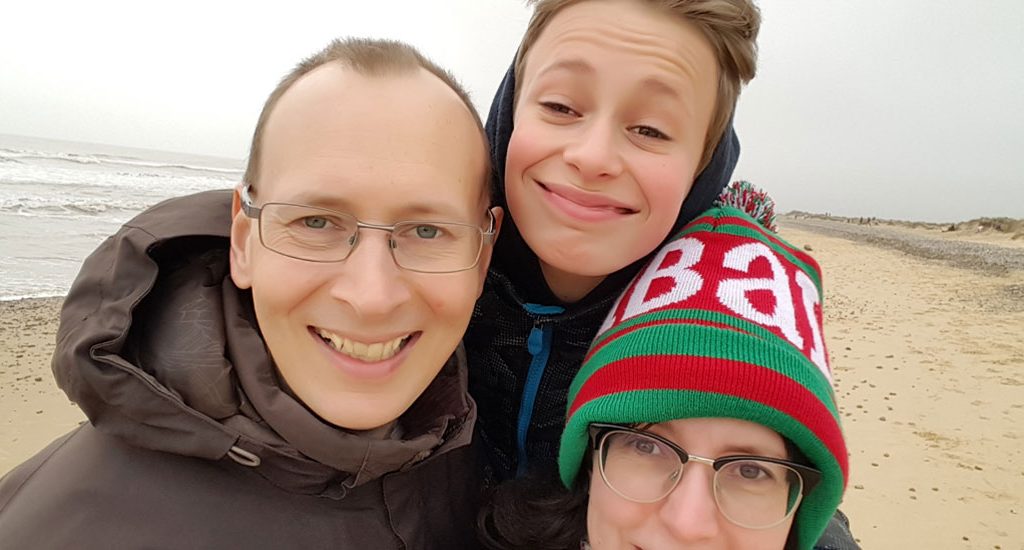
Life with a high grade brain tumour
Oliver Highway was first diagnosed with a brain tumour in April 2012, aged just 39. As a result of his tumour and its treatment, Oliver’s life was turned upside-down when he was left with speech and cognition problems. But with the help of his family, Oliver hasn’t let these side-effects hold him back.