Glioblastoma treatment
The most common glioblastoma treatment is surgery to remove as much of the tumour as possible, followed by a combination of chemotherapy and radiotherapy.
But, sometimes surgery isn’t possible, like when the tumour is too close to important parts of the brain. In this case, radiotherapy or chemotherapy, or these together, could be the main treatment.
There are also other treatment options available, like tumour treating fields (TTF). And, there are new developments in the current treatments.
Glioblastoma treatments include:
- Neurosurgery
- Radiotherapy
- Chemotherapy
- Chemoradiation (chemotherapy and radiation therapy)
- Immunotherapy
- Gliadel® wafers
- Avastin®
- Tumour treating fields
- Palliative care
Get your free Information Pack
Our Brain Tumour Information Pack can help you better understand your diagnosis and feel confident talking to your medical team.
Make the right choices for you
Our Step by Step interactive guide outlines what happens following a diagnosis, to answer your questions and help you to understand what to expect.
Join our online support groups
Our online support groups are a great place to connect with other people affected by a brain tumour.
Surgery as a glioblastoma treatment
The first treatment for glioblastomas is usually neurosurgery. Your surgeon will try to remove as much of the tumour as possible. Medical professionals call this debulking.
With glioblastomas it can be difficult to remove the whole tumour because:
- they are diffuse, this means they have narrow threads that spread out into the brain
- it can be hard to tell the difference between the edges of the main part of the tumour and normal brain tissue.
This means that surgery might leave parts of the tumour behind.
But, scientists made something called 5-ALA to help this. You can learn more about this ‘Pink Drink’ below.
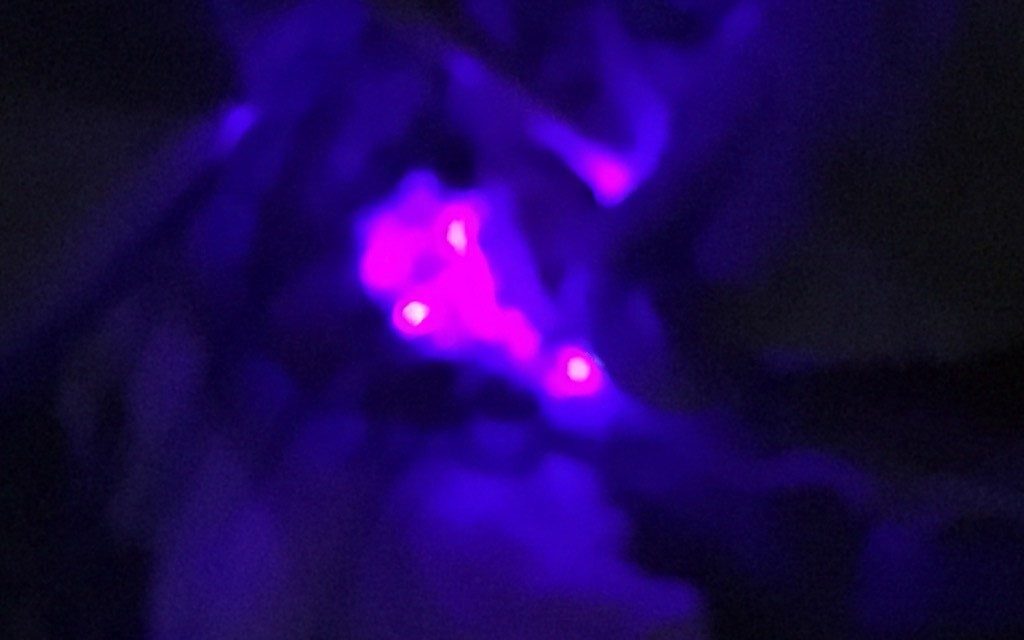
5-ALA: The Pink Drink
The Pink Drink causes tumour cells to glow bright pink under UV light and can be taken before surgery to help surgeons avoid healthy cells while removing more of the tumour.
Radiotherapy
Radiotherapy uses powerful beams of radiation to target and destroy tumour cells.
During treatment, you will lie on your back with a mask fixed over your face to keep your head still. The radiotherapy machine will then move around you to deliver treatment to the tumour.
Your treatment targets the tumour cells while affecting as few healthy cells as possible.
Radiotherapy is useful:
- as a main treatment if surgery isn’t possible
- after surgery to target any parts of the tumour that are still there
- to help slow the tumour’s growth
- to help stop a tumour from growing back.
Your healthcare team will speak with specialists and plan your radiotherapy schedule for you based on your diagnosis and treatment needs. Your schedule could be anything from a single session to multiple sessions over weeks or months.
Chemotherapy
Chemotherapy treats tumour cells with anti-cancer medicine.
Scientists designed this medicine to stop tumour cells copying themselves, which stops the tumour growing and makes the cells easier to destroy.
You might have chemotherapy in pill form. You could also have it as an injection or in a drip.
Chemotherapy can be a wafer that your surgeon puts into your brain during surgery and that releases the chemotherapy medicine as it dissolves.
We discuss chemotherapy wafers in more detail lower down the page.
You’ll have chemotherapy treatment in a series of sessions called cycles. Your healthcare team will decide on the right number of cycles in your treatment based on your diagnosis.
Treating glioblastomas with chemoradiation
Chemoradiation is radiotherapy over a number of weeks along with rounds of the chemotherapy drug temozolomide (TMZ). It’s used to slow the growth of any tumour cells that can’t be removed by surgery.
Temozolomide works by stopping tumour cells from making new DNA (the material that carries all their genetic information). If they can’t make DNA, they can’t divide into new tumour cells, so the tumour can’t grow.
Scientists also think that temozolomide makes the tumour cells more sensitive to the radiation.
You’ll usually take temozolomide for six months after you finish radiotherapy.
A new development in glioblastoma treatment is DCVax-L. Adding this to chemotherapy might prolong the life of people affected by glioblastomas. You can read more about this trial below.
Immunotherapy
Immunotherapy is a type of treatment that uses medicine to help the immune system fight tumour cells.
The immune system sometimes finds it hard to fight tumour cells because they aren’t that different from normal cells. Or, sometimes it can see the tumour cells but isn’t strong enough to battle them.
Immunotherapy helps the immune system find and destroy those tumour cells.
Immunotherapy hasn’t yet been as good at fighting brain tumours as it has other types of cancer. But, scientists are doing a lot of research to make immunotherapy for brain tumours better.
Trial finds DCVax-L® can prolong the lives of those living with a glioblastoma
A major phase III clinical trial has found that novel treatment DCVax-L can prolong the lives of people diagnosed with a new or recurrent glioblastoma.
Gliadel® wafers
Gliadel wafers are small wafers, coated with the chemotherapy drug carmustine.
Your surgeon will put these directly into your brain at the end of surgery. This means the treatment gets around the blood-brain barrier that prevents many chemotherapy drugs from entering the brain.
The wafers are only licensed in the UK for use in recurrent glioblastomas (glioblastomas that have come back) and when the surgeon is confident that at least 90% of the tumour has been removed.
Avastin®
You might have heard that the use of another drug called bevacizumab (Avastin) could be helpful in treating glioblastomas.
This is a type of monoclonal antibody that’s made to block the signals that help tumour cells grow.
But, medical authorities in Europe don’t feel there’s enough evidence for its effect on brain tumours. So, it’s not licensed to be used to treat brain tumours in the UK.
But, you might still be able to access it. Ask your medical team about Avastin if you’re interested in trying it.
Tumour treating fields
Tumour treating fields therapy, or TTF, is a type of treatment that uses electrical fields to go through your scalp and target your brain tumour.
These fields are designed to stop tumour cells copying themselves and hopefully destroy them. This will stop the tumour from growing or spreading.
You’ll attach sticky patches to your shaved head during this treatment. These hold ceramic discs. These pass the electrical fields into your brain. A battery that you carry in a backpack powers the discs.
Medical professionals call this type of therapy non-invasive. This means that it doesn’t break the skin or insert anything into your body.
Tumour treating fields therapy is only available privately and is quite expensive. If you can’t afford it, you might be able to access it through a clinical trial or through certain private healthcare insurance providers.
Palliative care
Palliative care is support to help you cope with the physical and emotional symptoms of a brain tumour. Your healthcare team supplies this and it covers all the areas that help improve your quality of life.
Palliative care helps manage the physical effects of your symptoms and side-effects of your treatment.
It also covers the emotional effects of your diagnosis, offering support for depression, anxiety, or other mental health conditions if you have them.
Palliative care also helps with practical problems that you might have. It can help support you with travel to your hospital appointments, organising any equipment you need to live more comfortably, accessing financial support and more.
Some people think of palliative care as end of life care, but this isn’t right. It’s there to improve the quality of life of people with a serious illness.
Effectiveness of glioblastoma treatment
Unfortunately glioblastomas are aggressive tumours and often resist treatment.
This is probably because the cells in the tumour aren’t all the same type.
Medical experts call this ‘heterogeneity’. This means that treatments will kill off some types of cell in the glioblastoma, but leave others, which can then continue to grow.
But, some of the research into the genes that play a role in glioblastoma development and growth is starting to help medical professionals know who would respond better to certain treatments.
An example of this research is biomarker tests, such as:
- MGMT gene methylation test
This shows how likely you are to respond to the chemotherapy drug, temozolomide. - Mutations in the IDH-1 and TERT gene
These mutations are associated with effects on overall survival.
A lot of medical centres test for these gene mutations. But if your hospital doesn’t and you’d like to have a test, ask your neuro-oncologist for information and advice about whether you’re suitable.

Tessa Jowell BRAIN MATRIX
The Tessa Jowell BRAIN MATRIX is a study which aims to improve knowledge of glioma and identify potential new treatments. Participants in the study will have their tumour tested in a lab to uncover its molecular profile.
Support and Information Services
Research & Clinical Trials Information
You can also join our active online community.
In this section

Get support
If you need someone to talk to or advice on where to get help, our Support and Information team is available by phone, email or live-chat.
Recommended reading

Share your experiences and help create change
By taking part in our Improving Brain Tumour Care surveys and sharing your experiences, you can help us improve treatment and care for everyone affected by a brain tumour.