
Ependymoma research
Ependymoma is one of the most common high grade brain tumour in children. According to the World Health Organisation, ependymomas can be catagorised as Grade 1, 2 or 3 depending on the individual tumour characteristics.
In around 40% of cases, the current treatment options offer no cure for patients and the long term survival from this tumour remains poor.
Current ependymoma research
Here are the research projects we are currently funding that relate to understanding or treating ependymoma
Professor Kristian Pajtler
Reprogramming immune cells for the treatment of ependymoma
Professor Kristian Pajtler
Reprogramming immune cells for the treatment of ependymoma
Professor Kristian Pajtler and his team are looking closely at how ependymoma cells interact with each other, and with immune cells. They are then hoping to retrain these immune cells to fight tumours, instead of helping them grow. By retraining the immune system, they believe ependymomas will respond better to CAR-T cell therapy.

Professor Richard Gilbertson
No brain tumour ignored
Professor Richard Gilbertson
No brain tumour ignored
This grant is for a large programme of work into two different rare childhood brain tumours. Professor Gilbertson will focus on three main areas of work: making better models to use in the lab, discovering and testing new drugs, and trialling the best way to deliver new drugs to tumours.
Other current research projects
Here are the research projects we are currently funding that relate to understanding or treating brain tumours, including ependymoma

Prof. Steve Clifford
INSTINCT:on a mission to beat childhood brain tumours
Professor Steve Clifford
INSTINCT:on a mission to beat childhood brain tumours
Our INSTINCT programme brings together experts from Newcastle University, the Institute of Cancer Research (ICR) and the UCL Institute for Child Health in London to research high-risk childhood brain tumours, including DIPG. The research programme on DIPG is being led by Dr Chris Jones at the Institute of Cancer Research. Dr Jones has extensive experience in understanding the genetic basis of these tumours and what is driving tumour growth and then developing new drugs that target the genes involved. Find out more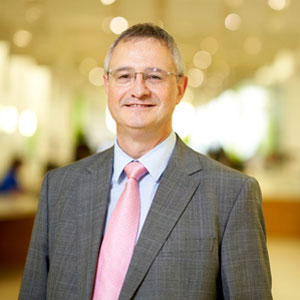
Prof. Colin Watts
Tessa Jowell BRAIN MATRIX
Professor Colin Watts
Tessa Jowell BRAIN MATRIX
The Tessa Jowell BRAIN-MATRIX is a first-of-its-kind study that will enable doctors to treat brain tumours with drugs that are more targeted than ever before. We are excited to be investing £2.8 million to set the study up, and to drive it into the future. Although the trial is being led from the UK, we expect it to deliver global impact for brain cancer patients. Find out more
Dr Jan Schuemann
Extreme dose rate proton therapy
